Table of Contents
- Why Aftermarket Triggers Demand a Different Maintenance Approach
- Aftermarket Trigger Drop Safety Testing: What to Check and When
- Duty Carry Firearm Maintenance Schedule: Round Counts, Lubrication, and Spring Replacement
- Legal Risks of Modified Carry Guns: Documentation and Liability
- Factory vs. Aftermarket Trigger Pull Weight: Finding the Duty-Ready Balance
- Cleaning and Lubrication Best Practices for Modified Trigger Groups
- When to Replace vs. Service: OEM Components and Tolerance Stacking
- Frequently Asked Questions
Last Updated: September 30, 2026
Why Aftermarket Triggers Demand a Different Maintenance Approach
Maintaining aftermarket triggers for duty carry is not the same job as wiping down a factory fire control group. Aftermarket triggers change the geometry inside the gun, and that changes what wears, what loosens, and what you need to watch.
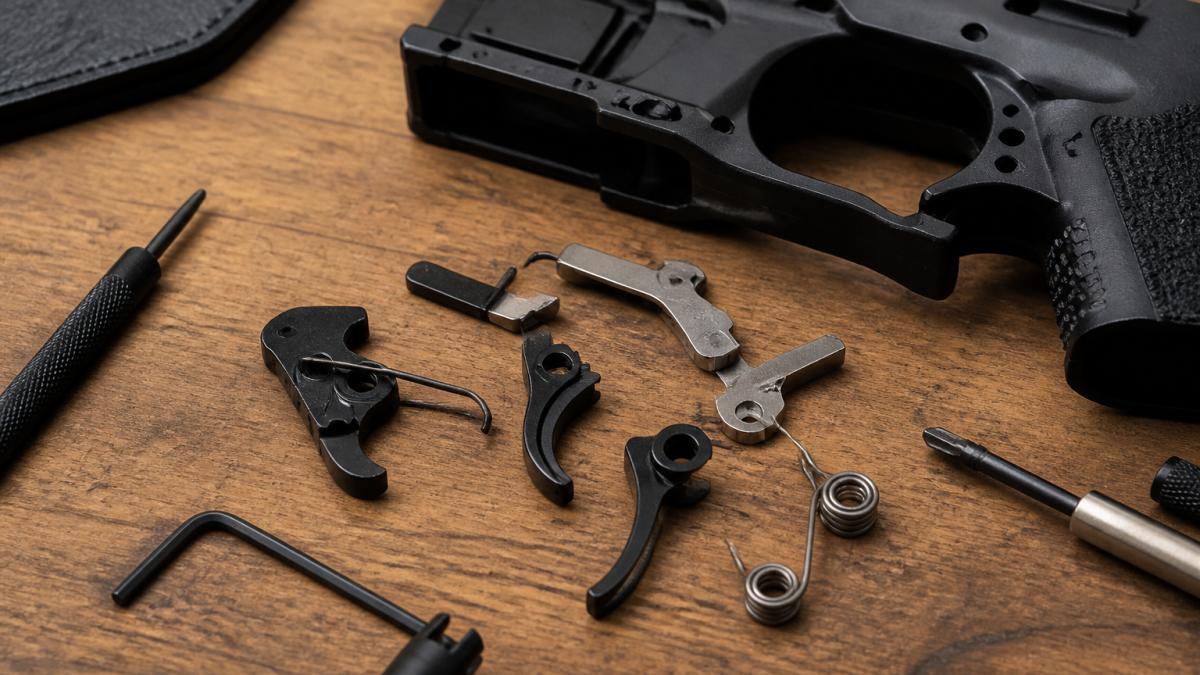
A factory trigger group ships as a matched system. The sear engagement, spring rates, and tolerances were all designed around each other. Drop in an aftermarket kit and you have introduced new variables: different sear angles, a lighter trigger return spring, a reshaped trigger shoe. Each one shifts load onto parts that were never asked to carry it.
The practical consequence is that maintenance intervals tighten. A duty pistol with a stock trigger might run a full season on a basic cleaning regimen. The same pistol with an aftermarket trigger installed often needs inspection at shorter round counts, because tolerance stacking between aftermarket and OEM components shows up as accelerated wear at the sear and disconnector interface.
This guide from Polymer Pew covers what actually changes, what to inspect, and how to document it. Below, we break down drop safety testing, lubrication points, spring replacement intervals, and the legal exposure that comes with a modified carry gun.
Aftermarket triggers don’t fail because they’re poorly made. They fail because they introduce new interfaces inside a system designed around different tolerances.
Aftermarket Trigger Drop Safety Testing: What to Check and When
Aftermarket trigger drop safety testing verifies that the firearm will not discharge if dropped or struck, and it should be performed after installation, after any trigger work, and at recurring intervals tied to round count.
The test itself is straightforward. With the firearm unloaded and the chamber verified clear, cock the action and strike the rear of the slide or the frame with a rubber mallet using moderate force. Repeat from several angles: muzzle up, muzzle down, and both sides. The striker or hammer must not release.
What most guides miss is that drop safety on a modified pistol depends on two separate mechanisms working together. The firing pin block, sometimes called the plunger safety, blocks the firing pin until the trigger is pulled. The trigger return spring must have enough tension to reset the trigger bar and re-engage the block after every shot. Install a lighter aftermarket return spring and you have reduced the margin on that second mechanism.
That is why drop safety testing is not a one-time event. Run it at installation, then again after the first range session, then at intervals you set based on your round count. A trigger that passes at 200 rounds can fail at 2,000 if the return spring has taken a set.
Skipping drop safety testing after a spring swap is the single most common mistake with modified duty guns. A weakened trigger return spring can leave the firing pin block disengaged, which turns a drop into a negligent discharge.
Duty Carry Firearm Maintenance Schedule: Round Counts, Lubrication, and Spring Replacement
A duty carry firearm maintenance schedule for a modified trigger should include inspection every 500 to 1,000 rounds, lubrication every 200 to 300 rounds, and spring replacement based on measured performance rather than a fixed calendar.
Round count is the only reliable clock on a duty gun. Calendar-based schedules fail because a pistol that sits in a holster for six months accumulates no mechanical wear, while a pistol that runs 300 rounds a week wears fast. Track rounds in a log, not on a calendar.
| Interval | Action | What to Inspect |
|---|---|---|
| Every 200-300 rounds | Lubricate | Trigger bar contact points, sear interface |
| Every 500-1,000 rounds | Inspect | Sear engagement, spring set, reset distance |
| Every 2,000-3,000 rounds | Measure | Trigger pull weight against baseline |
| On any pull weight drift | Replace | Trigger return spring, sear spring |
| Annually | Full teardown | Firing pin block function, pin wear |
The numbers above are starting points, not gospel. A competition gun running a very light trigger will need tighter intervals than a duty pistol with a moderate pull weight. The point is to have a schedule and write it down.
Preventative Maintenance Checklist for Modified Triggers
- Verify chamber clear and remove the magazine before any inspection
- Measure trigger pull weight with a gauge and record it against your baseline
- Check reset distance by feel and compare to your last log entry
- Inspect sear engagement for chipping, peening, or uneven contact patterns
- Confirm the firing pin block moves freely and returns under spring tension
- Look for spring set: compare trigger return spring length to a new spare
- Check all pins for walk and confirm installation torque on any threaded components
- Lubricate only the specified contact points, not the sear engagement surfaces
- Run drop safety testing from four angles before returning the gun to carry
- Log the date, round count, and any measurement changes
Performance Degradation Over Round Count
Performance degradation in a modified trigger group is gradual, which is exactly why it gets missed. Pull weight creeps up as springs take a set. Reset distance stretches as the trigger bar wears against the disconnector. Sear engagement changes as surfaces mate and then begin to peen.
None of these produce a dramatic failure. They produce a trigger that felt crisp at 500 rounds and feels vague at 3,000. On a range gun that’s an annoyance. On a duty pistol it’s a reliability problem you discover at the worst possible moment.
The fix is measurement, not feel. A trigger pull gauge costs less than a box of defensive ammunition and tells you more about your trigger’s health than any number of dry fire reps. Record the number every time you inspect. When it drifts outside your acceptable band, service the trigger before you carry it again. Maintaining this level of mechanical precision remains as critical to your readiness as the rest of your tactical gear essentials.
Legal Risks of Modified Carry Guns: Documentation and Liability
The legal risks of modified carry guns center on one question that a prosecutor or plaintiff’s attorney will ask after a defensive shooting: did the modification make the firearm more likely to discharge unintentionally?
There is no statute that bans aftermarket triggers for carry. The exposure is civil and evidentiary. In self-defense litigation, opposing counsel will argue that a lightened trigger shows recklessness or a desire for a “hair trigger.” Whether that argument has merit matters less than whether you can rebut it.
Documenting Modifications for Legal Defense
Documentation is your defense, and it starts before anything happens. Keep a written record of every modification: what part, who installed it, when, and what the measured trigger pull weight was afterward.
That record does three things. It establishes that the work was done deliberately by a competent installer. It establishes the actual pull weight, which rebuts any claim of a hair trigger.
Photograph your trigger pull gauge reading at each inspection and date the photo. It is the cheapest, most credible evidence of a consistent, documented pull weight you will ever have.
Factory vs. Aftermarket Trigger Pull Weight: Finding the Duty-Ready Balance
Factory vs. aftermarket trigger pull weight is a trade-off between shootability and the margin of safety that a heavier trigger provides. For duty use, that trade-off has a practical floor.
Cleaning and Lubrication Best Practices for Modified Trigger Groups
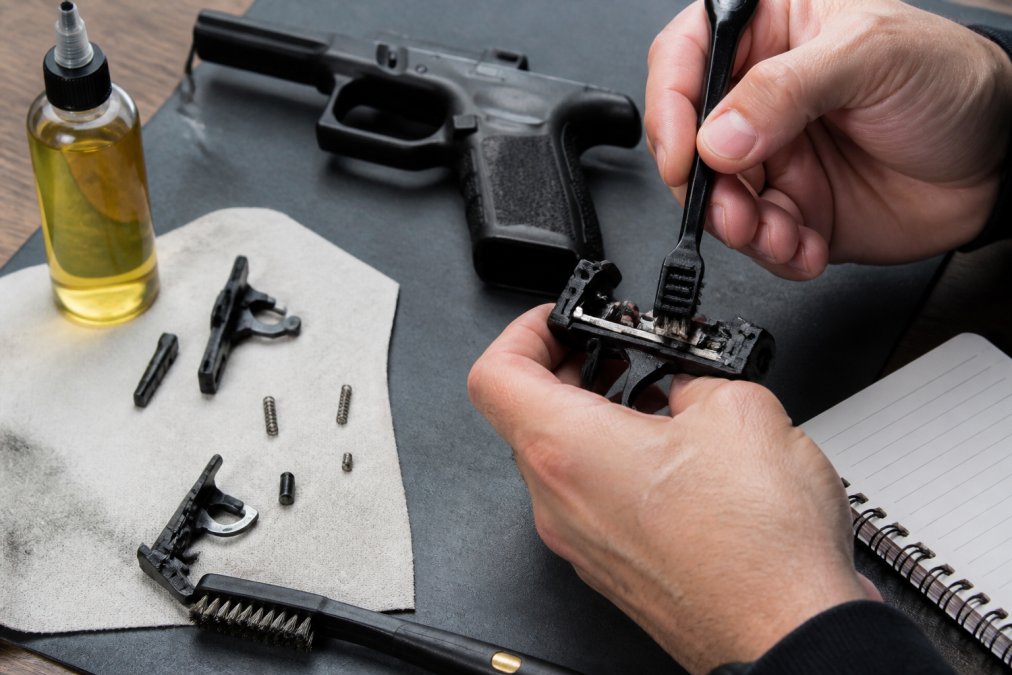
Cleaning and lubrication for a modified trigger group follows one rule that overrides everything else: never lubricate the sear engagement surfaces.
Where you do lubricate:
- Trigger bar contact points where it rides against the frame
- The disconnector pivot
- The trigger return spring at its seat
- Any pin that rotates under load
When to Replace vs. Service: OEM Components and Tolerance Stacking
Tolerance stacking is the reason some modified triggers run for thousands of rounds and others start misbehaving early. Every part has a tolerance range. Stack an aftermarket part at one end of its range against an OEM part at the other end, and the assembly can be out of spec even though each part individually passes inspection.
Frequently Asked Questions
Are aftermarket triggers safe for duty carry?
Safety depends on correct installation, drop safety testing, and regular maintenance. Aftermarket triggers can be safe if they retain internal safety mechanisms like the firing pin block and meet factory specification for sear engagement. Test drop safety by dropping the pistol from waist height onto a padded surface with a dummy round chambered. If the striker releases, the trigger is not duty-ready. Certified armorer inspection is recommended before carrying any modified trigger.
How often should you inspect an aftermarket trigger on a carry firearm?
Inspect every 500 to 1,000 rounds for duty carry, or at least monthly if carried daily. Check trigger pull weight with a gauge, look for wear on the trigger shoe and sear engagement surfaces, and verify reset distance and pre-travel remain consistent. Replace the trigger return spring every 3,000 to 5,000 rounds, or sooner if you notice spring fatigue. A duty carry firearm maintenance schedule should also include lubrication every 200 to 300 rounds.
Do aftermarket triggers void manufacturer warranties?
Most firearm manufacturers void warranties when aftermarket trigger components are installed, because the modification changes factory specification for sear engagement and pull weight. Check your pistol’s warranty terms before installing. Some brands offer their own warranty on the aftermarket part itself, but that does not cover the firearm. Keep receipts and installation records in case you need to file a claim or document the modification for legal defense.
What are the legal risks of modified carry guns in self-defense?
Prosecutors may argue that a modified trigger shows intent to harm or reckless disregard for safety. In self-defense litigation, expert witness testimony often focuses on whether the modification made the firearm less safe or deviated from factory specification. Documenting modifications for legal defense, including armorer inspections and drop safety testing results, can help show you maintained the firearm responsibly. Consult a defense attorney familiar with firearms cases before carrying a modified trigger.