Table of Contents
- Top Combat Armory Trigger Alternatives for Clones at a Glance
- Glock Clone Trigger Upgrades: Top Picks for Polymer Frames
- AR-Platform Trigger Upgrades for Clone Builds
- Forced Reset Trigger vs Binary Trigger: Which Is Right for Your Clone?
- Best Budget Trigger Kits for Custom Builds Under $150
- Trigger Shoe Compatibility and Long-Term Wear Analysis
- Legal Compliance and Safety for Trigger Modifications
- Conclusion
- Frequently Asked Questions
Last Updated: September 27, 2026
Top Combat Armory Trigger Alternatives for Clones at a Glance
Finding the best combat armory trigger alternatives for clones starts with one fact: most factory triggers are built to a price, not a standard. This guide from Polymer Pew breaks down the drop-in units, shoe upgrades, and forced-reset systems that hold up in clone builds, whether you run a Glock-pattern polymer frame or an AR-platform receiver.
Here’s the comparison at a glance:
| Trigger Option | Platform | Starting Price | Best For |
|---|---|---|---|
| Polymer Pew MKE Lower + Flat Trigger | Glock clone | See site | Variant compatibility, drop-in fit |
| Apex Tactical Action Enhancement Kit | Glock clone | $135 | Duty and carry builds |
| Overwatch Precision PolyDAT | Glock clone | $100 | Flat-shoe ergonomics |
| LaRue Tactical MBT-2S | AR-15 | $99 | Value-to-performance ratio |
| TriggerTech AR-15 Duty | AR-15 | $130 | Consistent, creep-free break |
Glock Clone Trigger Upgrades: Top Picks for Polymer Frames
Glock clone trigger upgrades live or die on fitment. Polymer frames vary in tolerance between manufacturers, so a trigger that drops into one receiver can require fitting in another.
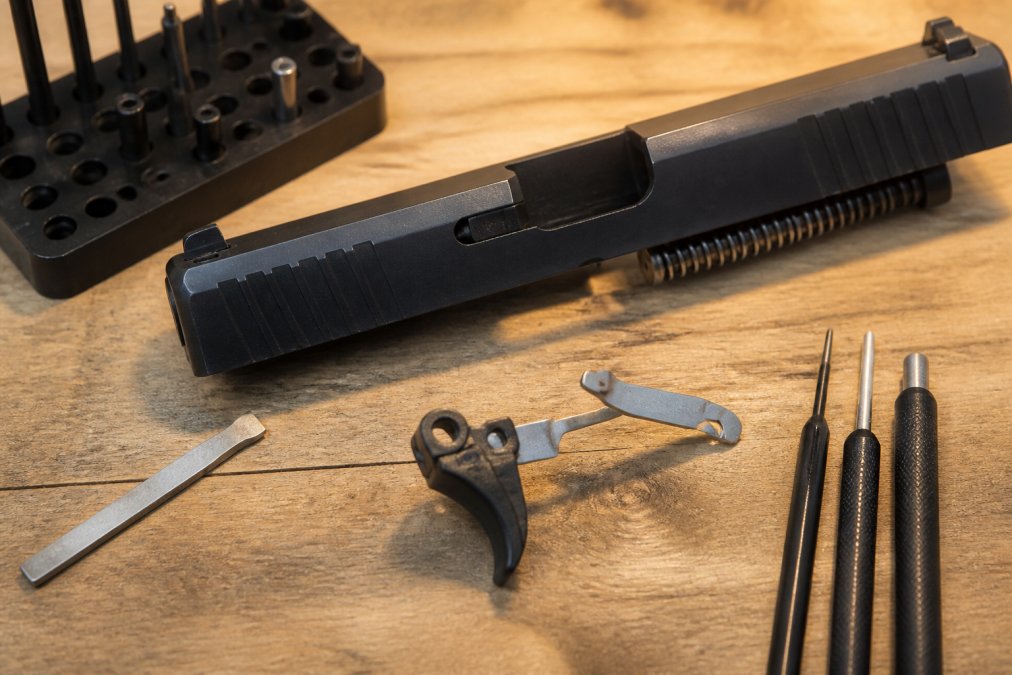
Before installing any drop-in unit, run a function check with the slide off and the connector seated. If the sear engagement feels gritty, the shoe is likely contacting the frame. A few passes with a fine stone on the contact point usually clears it.
AR-Platform Trigger Upgrades for Clone Builds
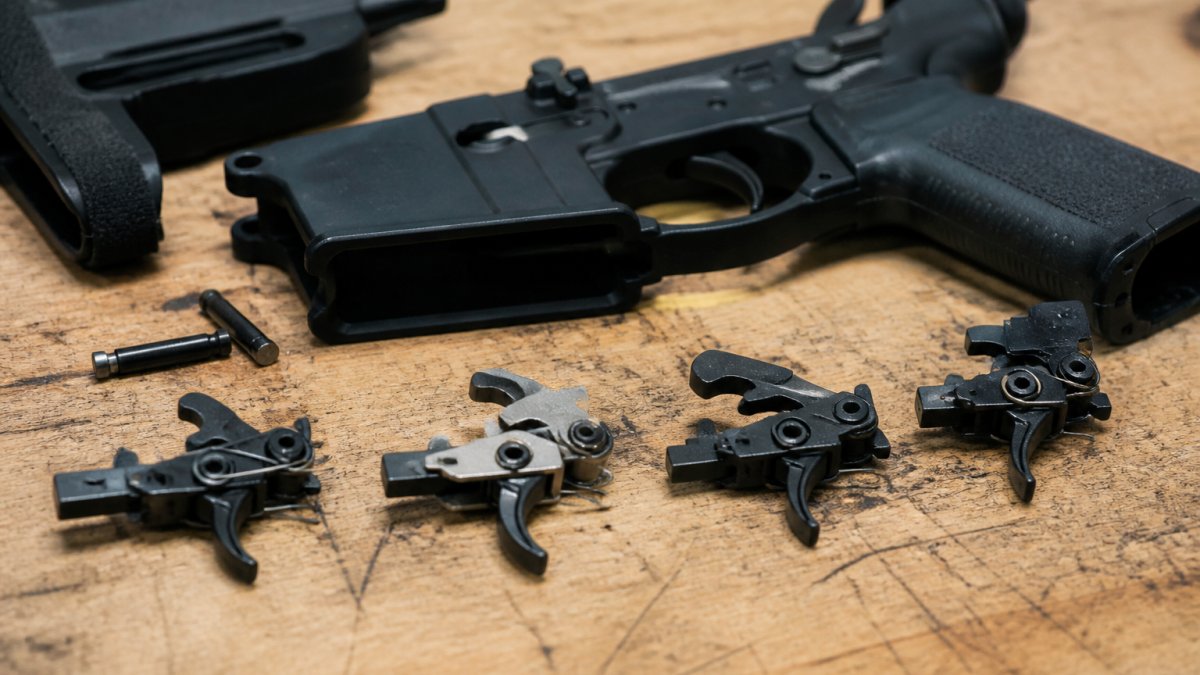
AR-platform clone builds have a deeper aftermarket, and two triggers dominate the value conversation.
| Trigger | Price | Stage | Standout Feature |
|---|---|---|---|
| LaRue MBT-2S | $99 | Two-stage | S7 tool steel, dual springs |
| TriggerTech Duty | $130 | Single | Frictionless Release |
| CMC Single Stage | $160 | Single | Ultra-fast reset |
Forced Reset Trigger vs Binary Trigger: Which Is Right for Your Clone?
A forced reset trigger fires on both the pull and the release, using the bolt’s cycling energy to reset the mechanism automatically. A binary trigger fires on the pull and again on the release, but relies on the shooter’s finger to reset it manually.
Forced reset and binary triggers can change a firearm’s classification under federal and state law. Installing one without checking your jurisdiction’s rules can create serious legal exposure. Verify compliance before you buy, not after.
Best Budget Trigger Kits for Custom Builds Under $150
Budget doesn’t have to mean unreliable, but the floor is real. Under $150, there are three solid paths.
The best budget trigger isn’t the cheapest one. It’s the one with published compatibility data and a return path if the fitment fails. Price matters less than whether the part actually works in your frame.
Trigger Shoe Compatibility and Long-Term Wear Analysis
Shoe compatibility is the gap most guides skip, and it is where clone builds fail. A trigger shoe’s geometry must match three things at once: connector angle, trigger pin alignment, and the frame’s internal tolerance band. Get one wrong and you get pre-travel that won’t adjust out, a mushy wall, or a shoe that drags and never resets cleanly. Even with perfect geometry, friction between the shoe and frame can impede the reset, a mechanical resistance that is often mitigated by the application of high performance gun oil.
Shoe-to-Frame Compatibility Matrix
Use this as a starting point, not a guarantee. Always confirm pin diameter and connector geometry against your specific receiver before buying.
| Shoe Type | Typical Platform | Connector Angle It Suits | Pin Alignment Notes | Known Fitment Friction |
|---|---|---|---|---|
| Flat, machined bar (Overwatch PolyDAT-style) | Glock-pattern polymer | Standard 90-degree connector | Uses factory pin; no reaming | May contact frame wall on tight-tolerance receivers |
| Flat, drop-in housing (Polymer Pew flat trigger) | Glock-pattern aluminum lower | Standard or minus connector | Tested for variant compatibility | Minimal; designed for drop-in |
| Curved OEM-profile replacement | Glock-pattern polymer | Standard connector | Factory pin | Rarely binds; least ergonomic gain |
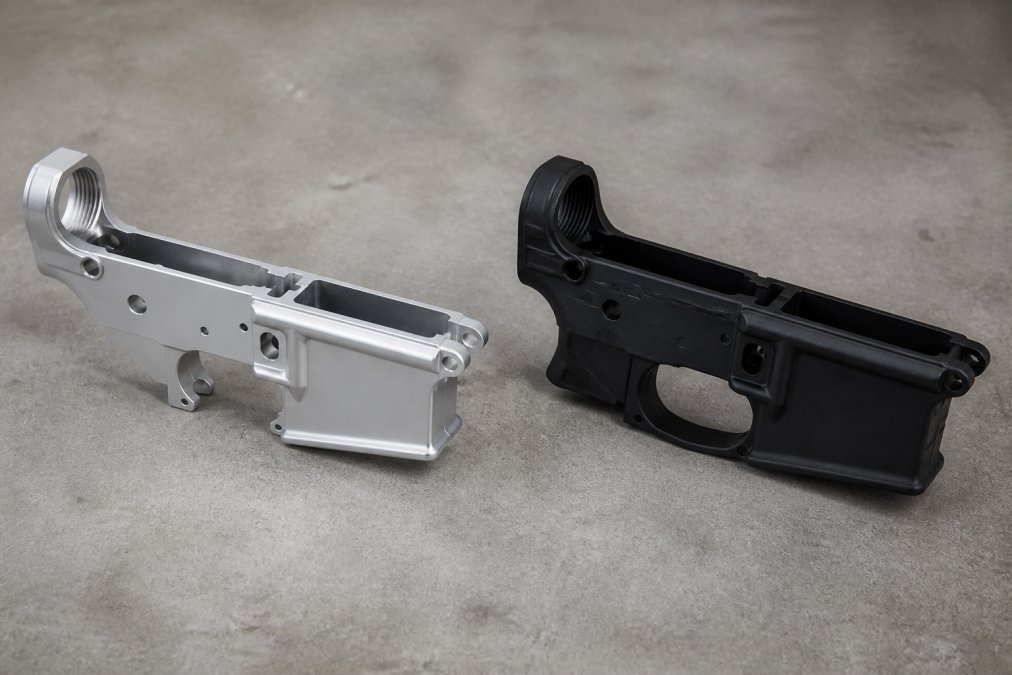
| Two-stage AR drop-in (LaRue MBT-2S) | AR-15 / AR-9 pattern | N/A (self-contained) | Uses factory hammer/trigger pins | Pin hole size variance on 80% lowers |
| Single-stage AR drop-in (TriggerTech, CMC) | AR-15 pattern | N/A (self-contained) | Uses factory pins; anti-walk pins recommended | Debris sensitivity on open designs |
How Shoe Geometry Changes Feel
Flat shoes change the use point and leverage angle, reducing perceived pull weight without touching spring weight, which is why a flat shoe on a stock connector often feels lighter than the same connector with a curved shoe. Curved shoes feel more familiar and forgive finger placement, but give up consistency shot to shot. Neither is better in the abstract; they suit different hands and styles.
Long-Term Wear: What Actually Fails and When
- 0-500 rounds: Break-in. Pull weight may drop slightly as surfaces mate. Re-check function after the first range session.
- 500-2,000 rounds: Coating wear on the connector tip. Feel stays consistent if the internals are hardened steel.
- 2,000-5,000 rounds: First signs of surface galling on unhardened sear surfaces. This is where cheap kits start to show a gritty break or a wandering pull weight.
- 5,000+ rounds: Spring fatigue becomes the dominant variable, not the shoe. Replace springs before blaming the trigger.
Log your round count against your trigger. A simple notebook entry every range trip tells you when a pull weight change is wear and when it is just break-in. Most shooters never do this and end up replacing parts that were fine.
Legal Compliance and Safety for Trigger Modifications
This is the section most guides water down, and it matters most before you spend money. What follows is general information, not legal advice. Laws and enforcement priorities shift, so the only reliable answer comes from current federal guidance and your state’s statutes.
The Federal Framework
The controlling question for any trigger that fires more than once per pull-and-release cycle is whether the design makes the firearm a “machinegun” under federal law. The definition turns on whether more than one shot is fired “automatically” by a single function of the trigger. Forced reset triggers have been the center of this debate, and the enforcement position has moved over time.
State-Level Variation
State law is where most builders get surprised. A few patterns:
- Some states ban trigger activators or “multiburst” devices by name, regardless of federal classification.
- Some states regulate by rate of fire or by the mechanical function, which can capture designs the federal definition does not.
- Some states have no specific statute but enforce under general public safety or hunting regulations.
Safety Verification After Any Trigger Change
Safety is the other half, and it’s non-negotiable. Any trigger change should be followed by a full function check:
- Safety engagement: Confirm the manual safety still engages and prevents the trigger from releasing the sear.
- Sear hold: With the firearm cleared and pointed in a safe direction, perform a bump test to verify the sear holds under impact.
- Reset: Cycle the action and confirm the trigger resets fully and consistently.
- Feeding and ejection: Cycle dummy rounds to check that the trigger change did not alter timing or interfere with the action.
- Drop test: With the firearm unloaded, drop it from a safe height onto a padded surface and confirm it does not discharge.
A trigger that passes a bench function check can still fail under live fire. Run at least a full magazine of range ammo through any new setup before you trust it for anything else. If you are modifying a clone you intend to carry, run several hundred rounds across multiple sessions before it earns a place in your rotation.
Compliance is a pre-purchase step, not a post-installation cleanup. Confirm the federal classification and your state’s statute before the part ships, and keep documentation of what you bought and when.
Conclusion
The trigger market rewards patience over speed. Confirm your frame’s tolerance, match the shoe to your connector geometry, and buy from sellers who publish compatibility data instead of hiding behind vague listings.
Frequently Asked Questions
Which is faster, a forced reset trigger or a binary trigger?
A forced reset trigger (FRT) is generally faster because it resets automatically as the bolt cycles, allowing for near-continuous fire as long as you hold the trigger forward. A binary trigger fires on both pull and release, which requires two distinct finger movements per shot. For most shooters, an FRT produces a higher rate of fire, but it also demands more training to control. Binary triggers offer a more predictable rhythm for some users.
What are the best drop-in trigger alternatives for Glock-style clones?
For Glock-style clones, consider the Apex Tactical Action Enhancement Kit for its duty-grade reliability or the Overwatch Precision PolyDAT for a flat-faced ergonomic upgrade. Each is a drop-in design that works with most polymer frames, though some minor fitting may be needed on certain clone receivers. Always perform a function check after installation to confirm safe sear engagement.
Are aftermarket triggers compatible with all budget clone frames?
No. Compatibility varies by frame manufacturer and generation. Some budget clone frames have slightly different tolerances, pin alignment, or connector geometry that can cause binding or inconsistent reset. Before buying, check whether the trigger is listed for your specific frame variant. Brands like Apex Tactical and Overwatch Precision publish compatibility notes. If you are unsure, start with a drop-in kit that includes a full spring set and housing to minimize fitment issues.
How does a performance trigger improve accuracy in a clone build?
A performance trigger reduces pre-travel and over-travel, giving you a shorter, more consistent pull. That means less sight movement during the break, which translates to tighter groups. A crisp wall and predictable reset also help you shoot faster without sacrificing control. For clone builds, the biggest gains come from eliminating creep and ensuring the sear engagement is smooth and repeatable. Pair a quality trigger with a polished connector for the best results.
What should I look for when choosing a trigger for a custom clone build?
Start with compatibility: confirm the trigger fits your specific frame and generation. Next, decide on pull weight and feel (single-stage vs two-stage, flat vs curved shoe). Check whether the kit includes springs and a connector, or if you need to buy them separately. For budget builds, a drop-in kit with anodized aluminum housing and stainless steel internals offers the best balance of cost and durability. Finally, verify that the trigger maintains factory safety functionality.
Choosing the right trigger for a clone build comes down to fitment, honest documentation, and parts that hold their pull weight over time. Polymer Pew stocks the aluminum MKE lowers, super safety kits, and flat triggers that clone builders actually ask for, all tested for variant compatibility before they ship. Get started with Polymer Pew and upgrade your platform with components built to run.