Table of Contents
- Why Lightweight Polymer Firearm Upgrades Matter
- Weight Reduction and Carry Comfort
- Polymer vs Aluminum Firearm Parts: Real-World Durability
- Recoil Management in Lightweight Builds
- Durability of Modern Firearm Polymers
- Customizing Firearms with Polymer Accessories
- Long-Term Performance and Maintenance
- Frequently Asked Questions
Last Updated: September 24, 2026
Why Lightweight Polymer Firearm Upgrades Matter
Lightweight polymer firearm upgrades address a real problem: weight fatigue during extended shooting sessions and carry situations. Modern polymers withstand the same pressures as metal counterparts while delivering measurable advantages in handling and performance.
Shooters report tangible improvements: better recoil management, reduced fatigue, and more comfortable carry. Properly engineered lightweight polymer firearm upgrades deliver real results under demanding conditions.
This guide covers durability, performance metrics, maintenance, and how to identify reliable components.
Weight Reduction and Carry Comfort
Lightweight polymer firearm upgrades reduce platform weight from 7-8 ounces (aluminum) to 4-5 ounces (polymer), delivering less wrist fatigue, reduced shoulder strain, and improved ergonomics over extended sessions.
Lighter builds improve platform management during rapid transitions, enabling faster sight acquisition and smoother follow-up shots, critical in competition.
For defensive or duty platforms, weight reduction translates to reduced fatigue during extended carry, a one-pound difference noticeably impacts end-of-shift comfort.
When evaluating polymer components for weight reduction, focus on the lower receiver first, it’s the regulated part and represents the largest weight savings opportunity. Pairing this with polymer handguards and accessories compounds the benefit without creating compatibility headaches.
Polymer vs Aluminum Firearm Parts: Real-World Durability
Modern firearm polymers use reinforced glass-filled nylon with impact-resistant additives, providing performance comparable to aluminum.
Polymers retain heat longer than aluminum in sustained fire, but modern designs manage this through thermal barriers and ventilation, this is normal material behavior, not failure.
Polymers resist corrosion naturally, making them ideal for harsh environments, salt water exposure, and extended storage, genuine advantages over bare aluminum.
Quality polymers maintain structural integrity over thousands of rounds through reinforced nylon compounds that preserve dimensional stability. Budget polymers warp or crack; engineered polymers hold specifications.
Polymer durability isn’t about matching aluminum, it’s about meeting the specific performance requirements of your application. Modern polymers excel in corrosion resistance and thermal management, while aluminum wins on heat dissipation. Choose based on your actual use case, not on material prejudice.
Recoil Management in Lightweight Builds
Lighter builds amplify felt recoil due to reduced mass. The solution is engineered recoil mitigation strategies, not adding weight back indiscriminately.
Buffer Weight and Spring Tuning
Upgrade to an H2 or H3 buffer (4.7-5.0 ounces) in lightweight platforms to reduce felt recoil by 15-20% by slowing bolt carrier velocity and extending dwell time.
Pair a heavier spring (5.5-6.0 PSI) with an appropriately weighted buffer to create a tuned system that manages recoil smoothly and reduces platform wear.
Lower Receiver Geometry and Recoil Path
Quality polymer lowers feature reinforced geometry around the buffer tube and optimized threads that handle recoil without flex. Polymer’s flexibility absorbs micro-vibrations aluminum transfers to hands and shoulders, creating smoother felt recoil.
Grip Texture and Hand Position
A textured grip with proper angle (20-30 degrees) prevents hand slip and improves recoil control. Competition shooters pair lightweight builds with premium grips because texture and angle directly affect platform management.
Handguard Design and Accessory Placement
Free-float handguards reduce harmonics and vibration. Geometry with grip angle or thumb rest lets you apply downward pressure to counteract muzzle rise. Weight-forward accessories shift balance forward, reducing felt recoil.
Muzzle Device Selection
Muzzle brakes reduce recoil impulse by 30-50% but increase noise and blast. Flash hiders preserve noise levels with minimal recoil reduction. In lightweight builds, a muzzle brake with hearing protection is practical.
Trigger and Ammunition Interaction
A crisp trigger (2-3 pounds, minimal overtravel) lets you manage recoil consistently. Poor triggers force you to muscle the platform, amplifying perceived recoil. Quality triggers paired with appropriate ammunition ensure predictable cycling.
Effective recoil management combines H2/H3 buffer, tuned spring, engineered lower receiver, free-float handguard with forward accessories, and quality trigger. The system works as a whole; poor execution in budget platforms explains initial resistance to lightweight builds.
Durability of Modern Firearm Polymers
Structural integrity depends on compound selection and manufacturing precision. Glass-filled nylon in quality components maintains strength across temperature variations.
Properly manufactured polymer components withstand pressures exceeding 60,000 PSI and maintain specifications through extended use.
UV exposure, temperature swings, and chemical exposure degrade polymers over time. Quality components use UV-stabilized compounds and coatings; budget alternatives skip these, causing premature failure.
Polymer components require slightly different cleaning protocols than aluminum. Avoid aggressive solvents; standard firearm-safe solutions work fine. Proper maintenance ensures performance consistency across years.
Quality polymer designs handle sustained rapid fire through thermal management features, ventilation, and heat-dissipating geometry. Budget polymers fail because they lack thermal stress engineering.
Customizing Firearms with Polymer Accessories
Lightweight polymer firearm upgrades integrate seamlessly with M-LOK and Picatinny rails, letting you optimize for your specific use case.
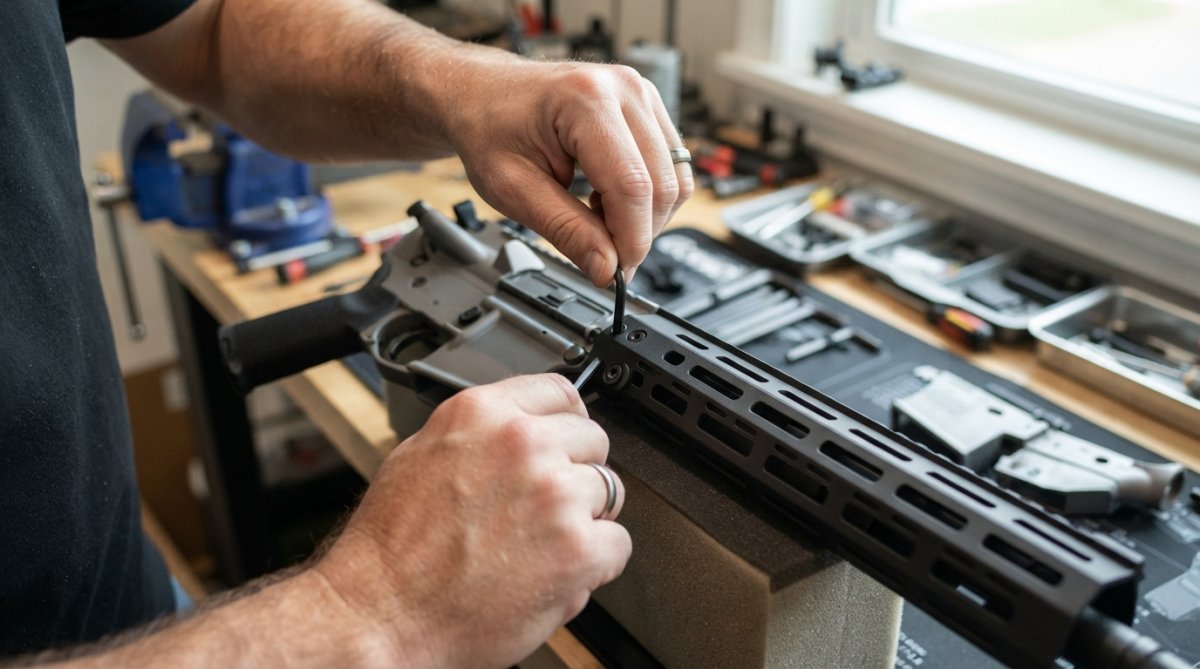
Start with a quality polymer lower receiver. Add components based on needs: handguards for control, rail systems for optics and lights, trigger upgrades for consistency. Each addition should serve a purpose.
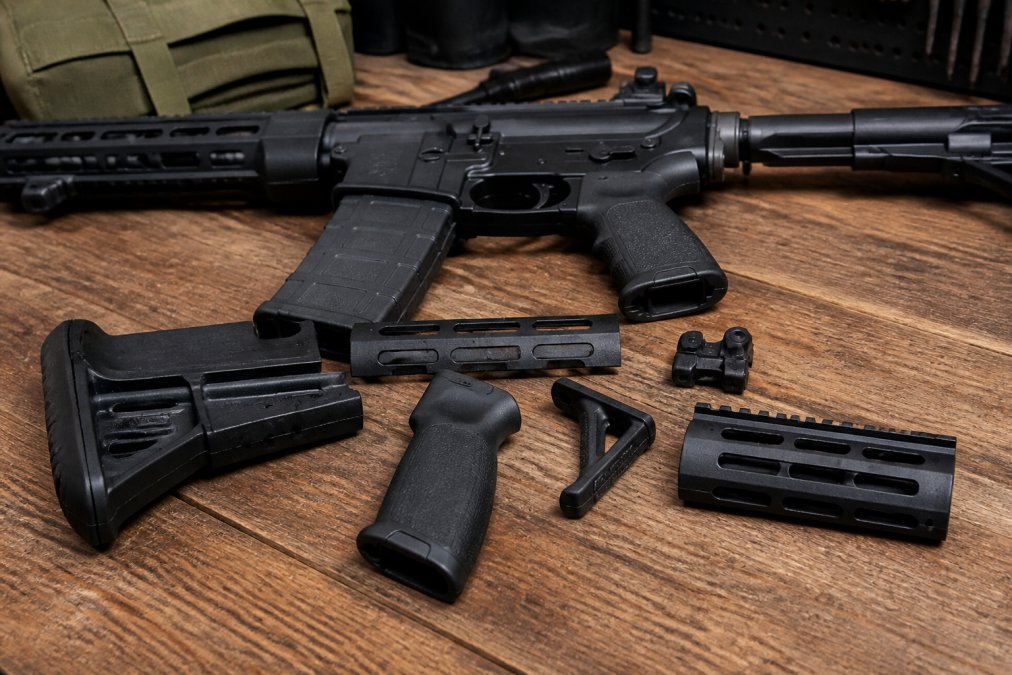
Polymer handguards are lighter than aluminum, offer excellent ergonomics, and integrate seamlessly with accessories. Free-float designs improve accuracy consistency in competition or precision builds.
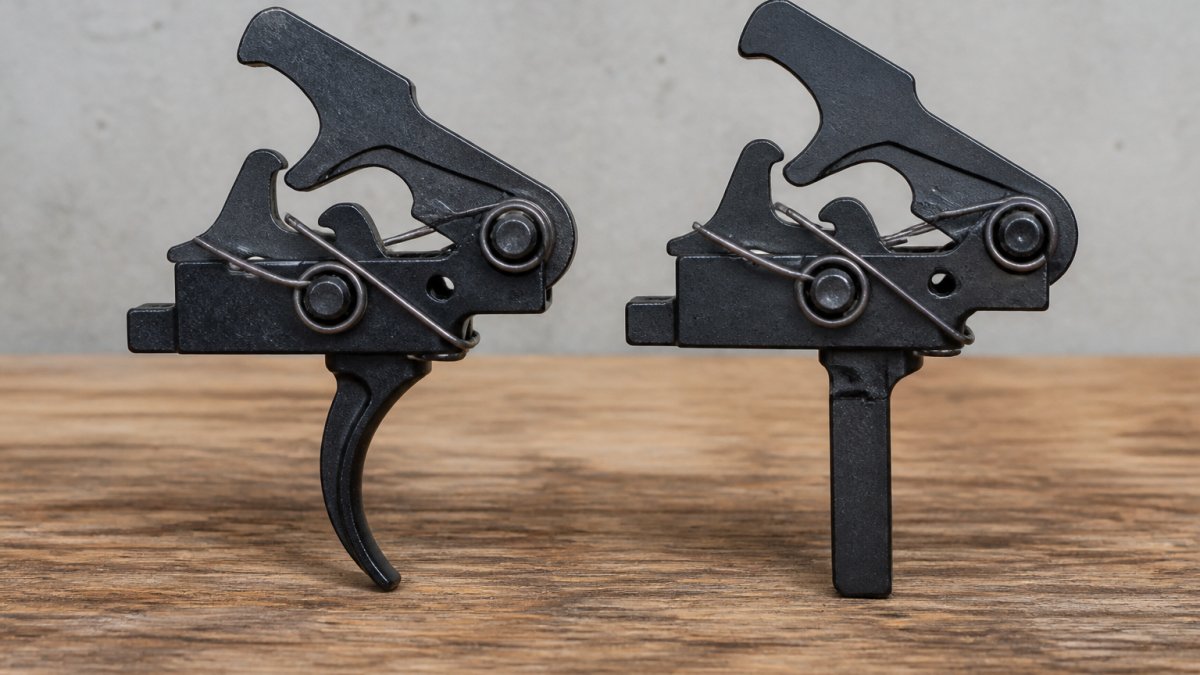
Quality flat-faced triggers with consistent pull weight and short reset improve platform management, tighter grouping, and faster follow-up shots.
The customization path should be intentional. Don’t add components because they look tactical. Add them because they improve your specific shooting discipline. A competition shooter needs different accessories than someone building a defensive platform. A lightweight build optimized for precision work looks completely different from one optimized for rapid engagement.
Avoid the common mistake of mixing quality and budget components indiscriminately. A premium trigger paired with a cheap handguard creates inconsistent performance. Your build is only as strong as its weakest link. Invest in quality across the platform, and you’ll see consistent reliability and performance.
Long-Term Performance and Maintenance
Long-term reliability of lightweight polymer firearm upgrades depends on consistent maintenance, realistic expectations about material behavior, and understanding which chemicals and environmental conditions actually threaten polymer integrity. This is where most content falls short, generic advice about “proper storage” misses the specific chemical and thermal mechanisms that degrade polymers over years of use.
Chemical Compatibility and Solvent Protocols
Not all firearm cleaning products are safe for polymer components. This matters because improper solvent choice can cause stress cracking, surface degradation, or dimensional changes that compromise fit and function over time.
Safe for polymer: Isopropyl alcohol (70-99%), standard mineral oil-based gun oils (CLP formulations), bore cleaners based on aliphatic hydrocarbons, and water-based degreasers. These solvents clean effectively without attacking the polymer matrix.
Problematic for polymer: Acetone-based solvents, MEK (methyl ethyl ketone), aggressive degreasers containing aromatic hydrocarbons, and some commercial gun cleaners formulated primarily for metal components. Acetone in particular can cause stress cracking in glass-filled nylon within minutes of contact. This isn’t about being delicate, it’s about using chemistry correctly. A shooter who accidentally uses acetone-based cleaner on a polymer lower can cause permanent damage that’s not immediately visible but manifests as dimensional instability or stress fractures under recoil.
The practical protocol: identify your polymer compound (quality manufacturers specify this), verify solvent compatibility before use, and test on a non-critical area if you’re uncertain. Most standard firearm maintenance products are safe, but reading labels matters.
Thermal Cycling and Heat Degradation
Polymers degrade gradually when exposed to sustained elevated temperatures. A polymer component stored in a hot car (140-160°F interior temperature on a summer day) for extended periods will experience molecular chain breakdown that reduces structural integrity. This isn’t catastrophic failure, it’s gradual loss of rigidity and dimensional stability.
UV exposure accelerates this process. Ultraviolet radiation breaks polymer chains, causing discoloration and embrittlement. A polymer handguard left in direct sunlight for months will become noticeably more brittle than one stored indoors, even if it still functions.
Quality polymer components include UV stabilizers and thermal additives that slow this degradation significantly. Budget polymers often skip these protections, which is where you see premature failure in 2-3 years of normal use.
Heat Cycling During Use
Wear Patterns and Cosmetic vs. Functional Degradation
Lubrication and Polymer Interaction
Inspection Schedule and Preventive Maintenance
The maintenance schedule is straightforward but specific:
- After every shooting session: Clean bore and chamber, wipe down external surfaces, inspect for visible damage or cracks.
- Monthly (if shooting regularly): Detailed inspection of polymer lower receiver for stress cracks, especially around the buffer tube area and trigger guard. Check handguard for warping (lay on a flat surface and look for gaps). Verify all fasteners are tight.
- Annually: Deep clean and inspection. Disassemble completely, inspect internal geometry for wear or damage, verify dimensions on critical contact points, check for UV degradation (discoloration or brittleness).
- After extreme conditions (salt water exposure, extended heat, impact): Immediate inspection and thorough cleaning with appropriate solvents.
Long-term polymer reliability isn’t mysterious. Use compatible solvents, store in stable conditions, inspect regularly for actual damage (not cosmetic wear), and avoid thermal extremes. Most failures occur because shooters use incompatible chemicals or store firearms in harsh conditions, not because polymers are inherently unreliable. Proper maintenance extends polymer component life to 10+ years of reliable service.
Frequently Asked Questions
Are lightweight polymer firearm upgrades as durable as traditional metal parts?
Modern engineering-grade polymers used in firearm components match or exceed traditional materials in structural integrity. Polymer handguards and accessories resist corrosion better than bare metal and handle thermal stress well. The key difference: polymers flex slightly under impact rather than crack, which actually improves longevity in field conditions. Drop-in kits and lower receivers made from reinforced polymers maintain consistent tolerances through thousands of rounds when manufactured to spec.
How does polymer material affect the overall weight of a firearm?
Switching from aluminum to polymer components typically reduces total platform weight by 8-16 ounces, depending on which parts you upgrade. Polymer handguards save 2-4 ounces, while lower receivers can reduce weight by 6-10 ounces compared to full metal alternatives. This weight reduction improves carry comfort during extended shooting sessions and reduces fatigue in competition environments without sacrificing accuracy or reliability.
Do polymer firearm upgrades affect recoil management?
Lightweight builds can increase felt recoil slightly, but this is manageable through proper technique and accessory selection. Polymer handguards with integrated rails distribute recoil energy effectively, and a quality stabilizer or buffer system compensates for the reduced mass. The ergonomic benefits of a lighter platform often outweigh minor recoil increases, especially for shooters who prioritize handling speed and accuracy over raw comfort.
What maintenance do polymer firearm components actually require?
Polymer parts require less frequent cleaning than bare metal due to corrosion resistance, but they still need regular inspection for wear. Use soft brushes and avoid solvents that degrade synthetic materials. Check polymer handguards and lower receivers for cracks or stress marks every 500 rounds, and ensure M-LOK attachment points remain tight. Proper cleaning protocols extend component lifespan significantly and prevent binding issues with drop-in kits.