Last Updated: November 10, 2026
Quick Summary
MKE clone lower compatibility depends on matching the lower housing and the trigger pack as separate components, each against your exact host model and lower configuration. Housing fit is checked first, then the pack, because a pack can bind even when the housing is dimensionally correct.
- Check the lower housing against your host firearm before testing any trigger pack.
- Test-fit the trigger pack without springs or pins; it should seat fully with no binding.
- Do not cross SEF and ambidextrous components, since they use different housings.
- Treat matrix entries tagged Low confidence as hypotheses to verify, not confirmed fits.
- Stop and consult a qualified gunsmith if the pack binds, rather than forcing it into the housing.
Table of Contents
- Why MKE Clone Lower Compatibility Is Not Simple
- Lower Housing Versus Trigger Pack: Two Different Questions
- MKE AP5 Trigger Pack Compatibility by Platform
- Model-by-Model Compatibility Matrix
- Choosing the Best Buffer Spring for MKE Lower Receivers
- Step-by-Step: Installing Aftermarket Triggers in MKE Clones
- Checking Your Build Before You Buy Your Next Lower Kit
- Frequently Asked Questions
Why MKE Clone Lower Compatibility Is Not Simple
If you’re building an MKE clone, lower compatibility is the first thing that can go wrong. Fitment questions about MKE clone lowers come up often among builders. MKE AP5 and PTR platforms are often discussed as relatively compatible options for aftermarket parts, but “compatible” covers a lot of ground.
The MKE line is produced on original HK-licensed machinery, which helps explain the high degree of interchangeability with standard MP5-pattern parts (Art Ake Down Tool’s MKE manufacturing background). Still, production variation exists between models. Check before you buy.
Lower Housing Versus Trigger Pack: Two Different Questions
Most fitment confusion comes from treating the lower housing and the trigger pack as one purchase. They are separate components with separate fit requirements, and a problem in one often looks like a problem in the other.
The lower housing is the receiver body that holds the fire-control group and the magazine well. The trigger pack is the fire-control assembly that drops into the housing and carries the trigger, hammer, sear, and selector interface. Because the pack depends on the housing’s internal geometry, a housing that is dimensionally correct can still produce a pack that binds.
A practical way to separate the two questions:
- Housing check (unloaded, no pack installed). Confirm the housing matches your host firearm’s pattern and selector configuration. Check the magazine well, the pivot and pin locations, and the overall length against your existing receiver or the manufacturer’s dimensions. If the housing does not seat the way your host does, stop here.
- Pack check (unloaded, housing already confirmed). Drop the trigger pack into the verified housing without springs or pins first. It should seat fully and move freely. Binding at this stage usually points to the pack or to a housing mismatch you missed in step one, not to a spring problem.
- Function check (unloaded, after assembly). Cycle the selector and trigger slowly and observe reset. Roughness or failure to reset with a correctly seated pack is a reason to stop and consult a qualified gunsmith.
This order matters. Testing the pack first and then blaming the housing wastes time and can hide the real cause. Keep each check separate in your notes so you know which component is failing.
Watch out: forcing a trigger pack into a housing that does not seat cleanly can crack the pack or deform the housing, and that damage is not always visible.
MKE AP5 Trigger Pack Compatibility by Platform
Trigger pack fit depends on the host platform. Start by identifying your exact model, then match the trigger pack to that platform.
- MKE AP5: Broadly compatible with MP5-pattern trigger packs, with the strongest community reports for ASD-style packs.
- PTR platforms: Generally compatible, though some variants need a fit check.
- Other MP5 clones: Varies by production run. Verify before ordering.
For a full breakdown of which packs we carry for each platform, see our MKE Lower Receiver Compatibility Guide 2026.
SEF Versus Ambidextrous and Navy Lower Configurations
Lower configuration changes what fits. SEF (single-fire/safety-selector) lowers are the most common on AP5 models. Ambidextrous and Navy-style lowers use different controls and housings.
Model-by-Model Compatibility Matrix
The matrix below organizes the compatibility question by host model, lower configuration, and the component being matched, with a confidence rating for each row.
| Host Model | Lower Configuration | Lower Housing Match | Trigger Pack Match | Evidence Basis | Confidence |
|---|---|---|---|---|---|
| MKE AP5 (SEF) | Single-fire/safety selector | MP5-pattern SEF housing | SEF-matched pack for that housing | Community fit reports; some manufacturer dimensions | High for housing, Medium for pack |
| MKE AP5 (Ambidextrous) | Ambidextrous selector | Ambi housing (not interchangeable with SEF) | Ambi pack matched to ambi housing | Firsthand reports; limited manufacturer spec | Medium |
| PTR platform | Standard MP5-pattern | Standard MP5-pattern housing | Generally compatible, verify per run | Mixed firsthand reports | Medium |
| Other MP5-pattern clones | Varies by production run | Verify dimensions before purchase | Verify per housing | Largely unverified | Low |
How to read the table:
- The lower housing and trigger pack are separate entries on purpose. A row marked compatible at the housing level does not confirm the trigger pack will seat without binding.
- The Evidence Basis column separates manufacturer documentation, firsthand builder reports, and unverified claims. Treat anything tagged Low as a hypothesis to test, not a fact.
- Lower configuration controls which housing and pack families are even candidates. Do not cross SEF and ambidextrous components.
Before relying on any row, confirm your exact model and part numbers against the manufacturer’s specifications. If your host firearm is not listed, or the production date is unclear, treat the entry as unverified and seek a qualified gunsmith’s opinion before ordering.
Choosing the Best Buffer Spring for MKE Lower Receivers
Buffer spring choice is a separate fit question from the trigger. The right spring depends on your buffer tube, your bolt weight and your host model, so check your buffer tube dimensions before ordering.
Step-by-Step: Installing Aftermarket Triggers in MKE Clones
Only do this with an unloaded firearm, on a clean bench, with a clear work area. For a full walkthrough of each stage, see our MKE Lower Receiver Installation Guide.
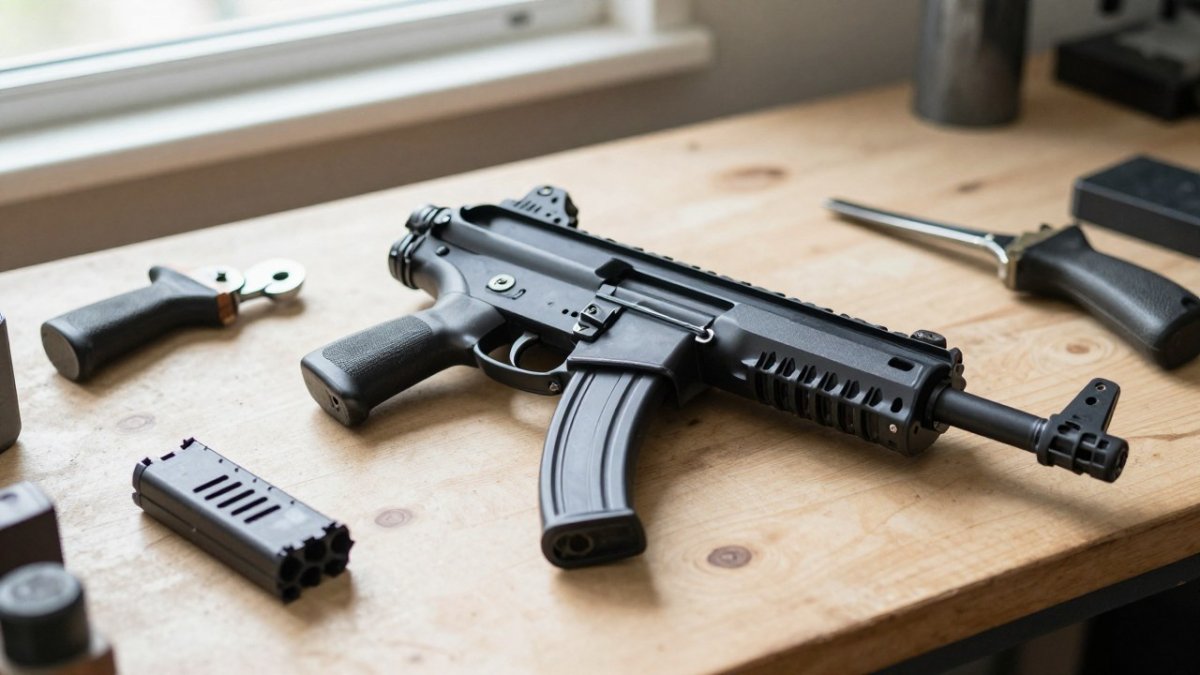
- Confirm the firearm is unloaded. Remove the magazine and check the chamber twice (Firearm Safety).
- Remove the existing trigger pack. Note how the spring and pins sit before you pull anything apart.
- Test-fit the new pack without springs. It should seat fully with no binding.
- Install the springs and pins. Keep the pin alignment square.
- Function-check dry. Cycle the trigger and selector slowly, then check the reset.
If anything binds or resists, stop and check the housing match before forcing it. A qualified gunsmith can help with stubborn fits.
Watch out: forcing a trigger pack into a mismatched housing can crack the pack or damage the housing.
Checking Your Build Before You Buy Your Next Lower Kit
Before ordering, run through this list:
- Confirm your host model and lower type (SEF, ambi, or Navy)
- Measure or confirm buffer tube and spring specs
- Match the trigger pack to the housing, not just the platform
- Read the manufacturer specs for your exact model
- Plan a dry fit check before final assembly
For a deeper walkthrough, see our Fitment Guide for Builders. When you’re ready to order, browse our complete trigger packs for MP5, including Century Arms, Zenith, MAC, PTR and HK versions, or check drop-in TAD options if you’re weighing trigger-assist devices.
Ready to build? Get your Flatties here!!!
Frequently Asked Questions
Are HK MP5 lower housings compatible with MKE AP5 clones?
Fit is not guaranteed for every variant or production run. Compare the housing and trigger pack dimensions against your specific host firearm before you assemble anything. If a part does not seat cleanly, stop and have a qualified gunsmith check it.
What is the difference between SEF and Navy style lower housings?
A SEF (selector, enable, fire) lower uses a selector configuration on one side, while Navy style and ambidextrous lowers add controls that change how the fire-control group sits and how the housing interacts with the trigger pack. Choosing the wrong style can leave a housing that looks correct but does not index or function as intended. Confirm which configuration your host firearm uses, then match the lower and trigger pack to that same configuration.
What buffer spring should I use with an upgraded MKE lower?
Select a buffer spring that matches the buffer weight and bolt carrier group in your build, not only the lower housing. Choose the spring that gives reliable cycling with your specific host configuration and aftermarket parts. Replace the spring if it shows deformation or lost tension, and recheck cycling after any lower or trigger change. Verify fit against the manufacturer specifications for your exact model before installing.
Do aftermarket triggers fit MKE lower receivers?
MKE clone-to-clone variation means fit can differ between production runs. Check the trigger pack against your lower housing dimensions and fire-control group before installation. Verify with a physical fit check. Always work with the firearm unloaded and follow the manufacturer’s installation instructions.