Last Updated: October 25, 2026
Quick Summary
The benefits of ambidextrous lower receiver controls come down to keeping every critical control within reach of your trigger finger or support hand without breaking your grip. An ambidextrous lower duplicates or mirrors the safety, magazine release, and bolt catch so you can run them from either side of the receiver. This speeds up reloads, simplifies malfunction clearance, and helps left-handed shooters and competitors most.
- A bilateral setup typically mirrors three controls: the fire selector, magazine release, and bolt catch and release.
- A right-side bolt release only helps if it is reachable without shifting your firing grip.
- A left-side magazine release paddle can be depressed by a sling, barricade, or chest rig during movement.
- Dedicated ambi lowers carry a price premium, while add-on kits cost less but add installation time.
- If you shoot right-handed and casually, a standard lower with a quality trigger upgrade likely delivers more per dollar.
Table of Contents
- What Ambidextrous Lower Receiver Controls Actually Do
- Ambi Lower vs Standard Lower: What Really Changes
- AR-15 Ambidextrous Bolt Release: Lockback and Speed
- AR-15 Ambidextrous Magazine Release and Reload Access
- Why a Left-Handed AR-15 Lower Setup Matters
- Benefits Right-Handed Shooters Get From Bilateral Controls
- Accidental Activation, Compatibility, and the Cost Trade-Off
- Picking the Right Lower for Your Next Build
- Frequently Asked Questions
What Ambidextrous Lower Receiver Controls Actually Do
The benefits of ambidextrous lower receiver controls come down to one idea: every critical control sits within reach of your trigger finger or support hand without breaking your grip.
Controls That Get Duplicated on a Bilateral Setup
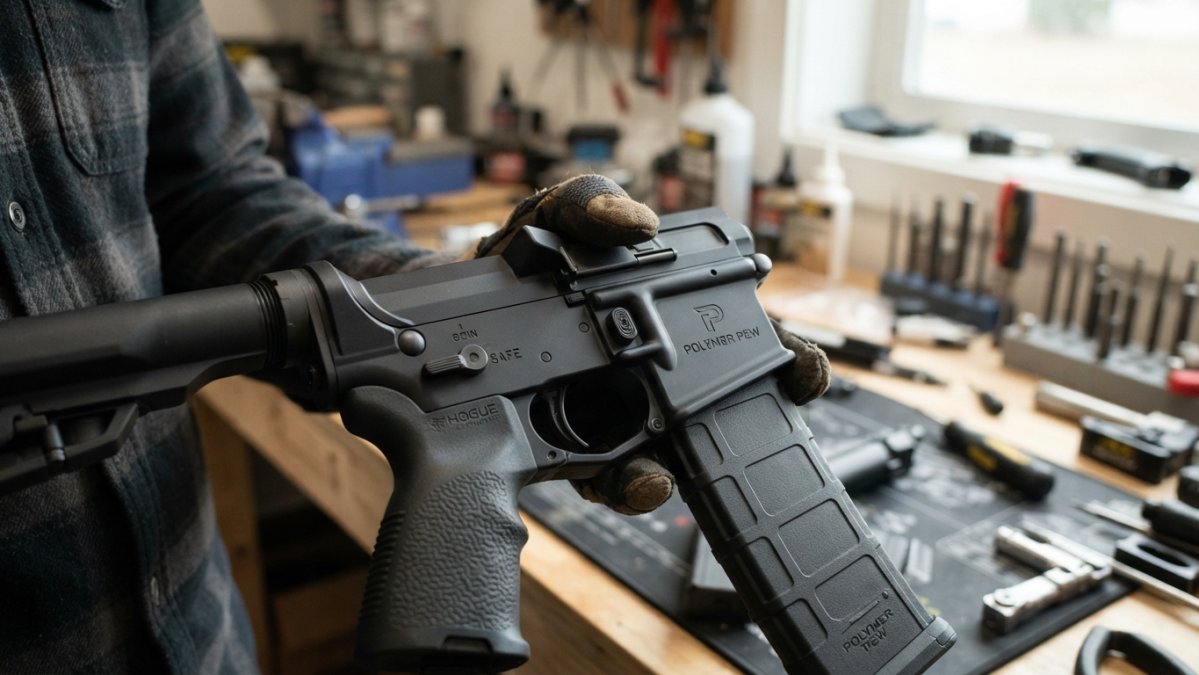
A bilateral setup typically mirrors three controls:
- Fire selector: an ambi safety selector on both sides of the receiver
- Magazine release: a right-side button plus a left-side paddle or lever
- Bolt catch and release: a left-side catch plus a right-side actuator
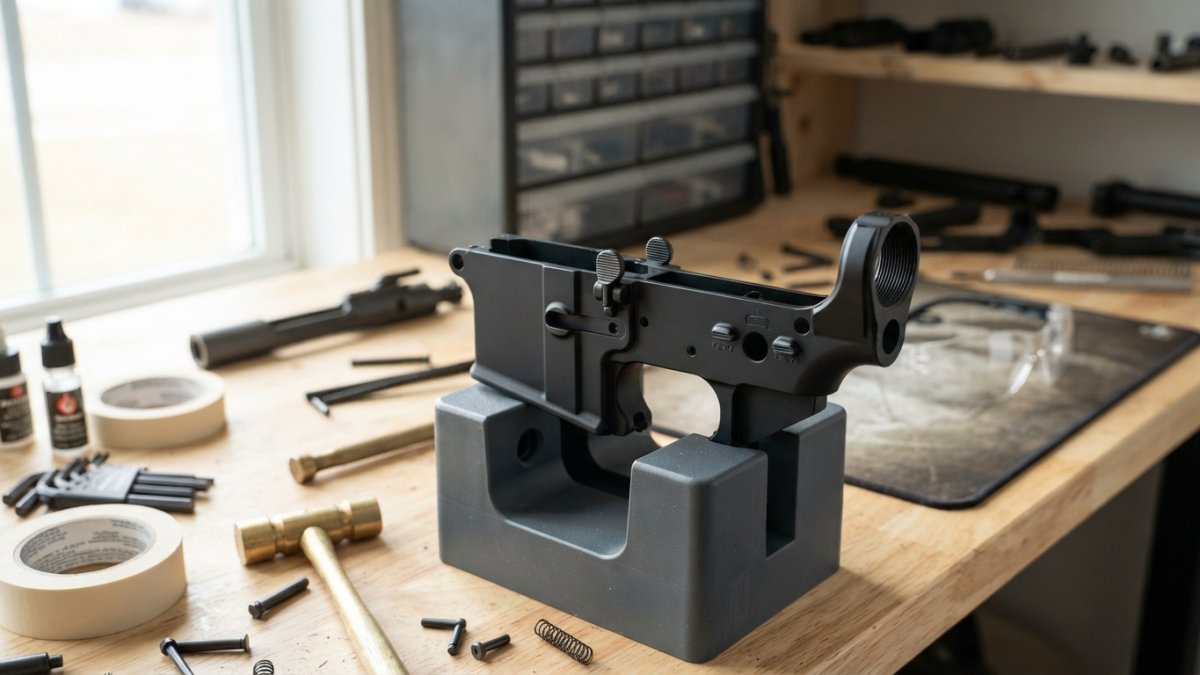
The safety selector is the most common first upgrade. If you are adding one, our walkthrough on how to install an ambidextrous safety selector covers the detent, spring, and fitment steps.
Ambi Lower vs Standard Lower: What Really Changes
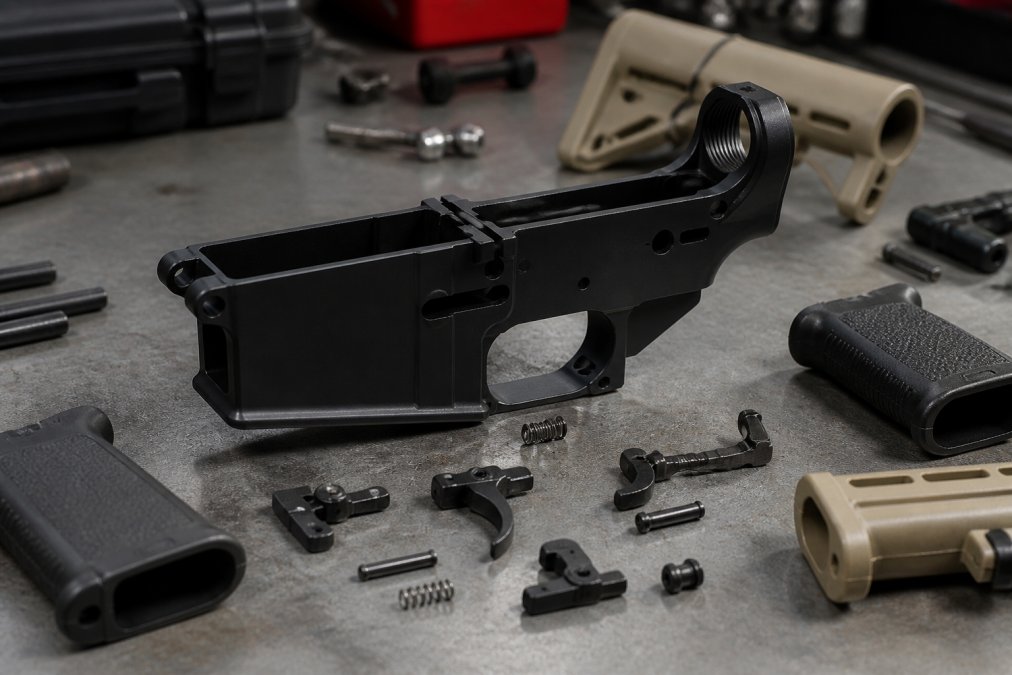
The core difference in the ambi lower vs standard lower debate is control count and the machining required to house those controls, not receiver geometry. A standard lower gives you a left-side selector, left-side bolt catch, and right-side magazine release.
That machining is where cost, material, and installation complexity enter. Most dedicated ambi lowers are aluminum, and the material comparison in our guide to aluminum vs polymer lower receivers explains how durability and weight trade-offs play out. But the bigger practical difference is how the controls are integrated.
Built-In vs Add-On: Two Paths to Ambi Controls
There are two ways to get bilateral controls, and they behave differently:
- Dedicated ambi lower: The magazine release, bolt catch, and selector provisions are machined into the receiver. Controls are typically proprietary to that lower’s design, so replacement parts must match the manufacturer’s pattern. Installation is done at build time and generally requires no aftermarket fitting.
- Add-on control kit: You start with a standard lower and install a right-side bolt release, a left-side magazine release paddle, and an ambi safety selector. These kits vary widely in how much fitting they need, some drop in, others require minor material removal or spring changes. Compatibility depends on the lower’s internal geometry, not just the pin holes.
A common pattern is that add-on kits cost less than a new receiver but add installation time and require you to verify fit with your specific lower. Dedicated lowers cost more up front but eliminate the compatibility guesswork.
Compatibility Checks Before You Commit
Before buying either path, confirm these points:
- Lower pattern: Confirm the lower accepts your chosen controls. Ambi bolt releases and magazine releases are not universal across all lower designs.
- Upper and BCG: A right-side bolt release interacts with the bolt carrier group. Verify your BCG has the necessary clearance and that the release engages the bolt catch reliably.
- Magazine setup: Left-side magazine release paddles can interfere with certain magazine well flares or extended mag bases. Test with the magazines you actually run.
- Selector detent and spring: Ambi selectors use a different detent and spring arrangement. Confirm the lower’s selector channel is machined to accept the ambi selector you plan to use.
Do not assume a part labeled “ambidextrous” fits every lower. Fitment is lower-specific, and a control that binds or fails to reset is a safety issue, not just an inconvenience.
Best for: left-handed shooters and competitors who reload fast.
Skip if: you shoot right-handed, casually, and never run off-hand drills.
AR-15 Ambidextrous Bolt Release: Lockback and Speed
The AR-15 ambidextrous bolt release is the control that changes malfunction clearance most.
In practice, this matters during reloads and clearing double feeds. The support hand keeps the rifle steady while the firing hand actuates the release. That is a genuine manipulation-speed gain, not marketing.
What most guides miss: a right-side bolt release only helps if it is reachable without shifting your firing grip. Check reach before you buy.
AR-15 Ambidextrous Magazine Release and Reload Access
The AR-15 ambidextrous magazine release solves a specific problem: releasing the magazine with your firing hand while your support hand grabs a fresh one.
For left-handed shooters, this is close to essential. A standard right-side button forces a hand shift on every magazine change. An ambi paddle removes that step entirely.
Watch out: some add-on left-side releases sit close enough to the receiver that a sling or gear can bump them. Test with your actual kit before trusting one in a match.
Why a Left-Handed AR-15 Lower Setup Matters
A left-handed AR-15 lower setup is about keeping the manual of arms identical regardless of which shoulder the rifle sits on.
The gains show up in three places: faster magazine changes, cleaner malfunction clearance, and less fatigue during long strings of fire. Ergonomics stop fighting the shooter.
If you are building your first rifle and want the bigger picture before committing to an ambi model, start with our beginner’s guide to choosing an AR-15 lower receiver.
Benefits Right-Handed Shooters Get From Bilateral Controls
Right-handed shooters gain more than they expect. Support-side shooting, barricade work, and weak-hand drills all expose the limits of a standard lower. Bilateral controls let you transition shoulders without relearning the controls.
Competitive shooters benefit most. Stage designs force awkward positions, and off-hand operation of the bolt catch and mag release keeps the rifle fed without a grip reset. Training with ambi controls builds handling efficiency that carries into every position.
The honest limitation: if you never shoot support-side, a right-handed shooter will notice little difference in casual range sessions.
Accidental Activation, Compatibility, and the Cost Trade-Off
Accidental activation is the real risk with ambi controls, and it deserves straight talk. Extended levers and paddles sit closer to gear, slings, and the ground during prone work. A control that is easy to reach is also easier to bump. The trade-off is not hypothetical: a left-side magazine release paddle that sits proud of the receiver can be depressed by a sling, a barricade, or a chest rig during movement.
Snagging and Unintended Activation
Most practitioners find that the risk concentrates in three areas:
- Sling and gear contact: A sling routed across the left side of the receiver can catch a paddle-style magazine release. Test with your actual carry setup, not just at the bench.
- Prone and barricade work: The left side of the lower is the side most likely to contact the ground or a prop. A low-profile paddle reduces the chance of a bump; an extended lever increases it.
- Holster and case transitions: Controls that protrude can snag on case foam or a sling loop during transport.
The mitigation is straightforward: choose controls with shielding or a low-profile design, verify reset and tension after installation, and practice handling drills that include bumping the controls intentionally so you know how the rifle responds.
Before trusting an ambi magazine release in a match, run a few dry reps with your sling attached and the rifle in prone. If the paddle can be depressed by the sling, adjust the routing or choose a different control.
Compatibility Is the Second Hurdle
Not every ambi part fits every lower, and drop-in kits vary in how much fitting they need. Our guide to common mistakes when upgrading firearm controls covers the fitment traps, and the firearm component compatibility guide maps standards across platforms. The key checks are the same as in the previous section: lower pattern, BCG clearance, magazine well geometry, and selector channel machining.
The Cost and Value Framework
On cost, the decision comes down to how often you actually use the mirrored controls. Dedicated ambi lowers carry a price premium over standard lowers, and add-on control kits cost less than a new receiver but add installation time. Neither path is automatically the better value.
A practical framework:
- If you shoot left-handed or compete regularly: The premium for a dedicated ambi lower is easier to justify because you use the mirrored controls on every stage and every reload.
- If you shoot right-handed and train off-hand occasionally: An add-on kit may deliver most of the benefit at lower cost, provided you verify fit and accept the installation time.
- If you shoot right-handed and casually: A standard lower with a quality trigger upgrade likely delivers more per dollar than either ambi path.
Value comes from hardened stainless internals and anodized aluminum housings, not from the lowest sticker. A control that binds, fails to reset, or activates unintentionally is not a bargain at any price.
| Control | Standard Lower | Ambi Lower | Main Benefit |
|---|---|---|---|
| Fire selector | Left side only | Both sides | Off-hand safety operation |
| Magazine release | Right side only | Both sides | Faster reloads |
| Bolt catch/release | Left side only | Both sides | One-hand malfunction clearance |
| Cost | Lower | Price premium | Depends on use |
| Installation | Simple | More fitting | Check compatibility |
Picking the Right Lower for Your Next Build
Start with an honest use case. If you shoot left-handed, compete, or train off-hand regularly, a dedicated ambidextrous lower earns its premium.
Then check compatibility before you commit: confirm the lower accepts your chosen controls, your upper, and your magazine setup. Finally, budget for the whole build, not just the receiver.
At Polymer Pew, we build components for exactly this decision: aluminum full-size MKE lowers tested for variant compatibility, full metal kits with anodized aluminum housings and stainless steel internals, and specialized super safety kits and flat triggers.
Frequently Asked Questions
What are the benefits of an ambidextrous AR-15 lower?
The main benefits are control access from either side, faster reloads and malfunction clearance, and a shorter reach to the bolt catch and magazine release. An ambidextrous lower also makes support-side and off-hand shooting less awkward, which helps left-handed shooters and right-handed shooters who train transitions. The gains show up most in drills that involve magazine changes and locking the bolt back, where you no longer have to break your grip or roll the rifle to reach a control.
Do ambidextrous controls help right-handed shooters?
Yes, mostly in support-side work. A right-handed shooter running off-hand drills, barricade positions, or a transition to the left shoulder gets the same access a left-handed shooter has by default. The AR-15 ambidextrous magazine release and bolt release let you keep your firing hand on the grip while the support hand runs the controls. If you never shoot support-side and never practice off-hand reloads, the practical gain is smaller and the extra cost is harder to justify.
What is the difference between an ambidextrous lower and ambidextrous controls?
An ambidextrous lower is a receiver machined with bilateral features built in, so the controls are part of the platform. Ambidextrous controls are add-on parts, such as a replacement selector, magazine release, or bolt catch, that bring left-side or right-side function to a standard lower. The receiver route usually costs more and locks in the design; the add-on route is cheaper and reversible but depends on the lower’s existing geometry and how well the parts fit.
Are ambidextrous AR-15 controls worth the extra cost?
It depends on how you shoot. If you run competitive stages, train off-hand drills, or shoot left-handed, bilateral controls earn their place because they cut the steps in a reload and let you keep a firing grip. If your rifle is a range gun shot from one side, a standard lower with a good trigger and a reliable bolt catch does the job. Compare the price premium against the drills you actually run before you spend.
The hard part is not choosing an ambi lower. It is finding components that actually fit your build without a bench full of modifications. Polymer Pew stocks aluminum MKE lowers tested for variant compatibility, full metal kits with anodized aluminum housings and stainless steel internals, and flat triggers built for consistent feel. Get started with Polymer Pew and build a lower that runs the way you shoot.