Table of Contents
- What Does Mil-Spec Actually Mean for an AR-15 Lower?
- Mil-Spec AR-15 Lower Receiver: Materials, TDP, and Tolerances
- Forged vs Billet Lower Receiver: Which Builds Better?
- Mil-Spec vs Commercial Buffer Tube: The Real Difference
- The ‘Mil-Spec’ Marketing Fallacy: What Labels Hide
- How to Choose an AR-15 Lower Receiver That Fits Your Build
- Frequently Asked Questions
Last Updated: September 16, 2026
What Does Mil-Spec Actually Mean for an AR-15 Lower?
Mil-spec means a part was built to a government-issued technical data package, not that it beats a well-made commercial part. For a mil-spec AR-15 lower, that means following the original military drawings for dimensions, material, and finish.
Mil-Spec AR-15 Lower Receiver: Materials, TDP, and Tolerances
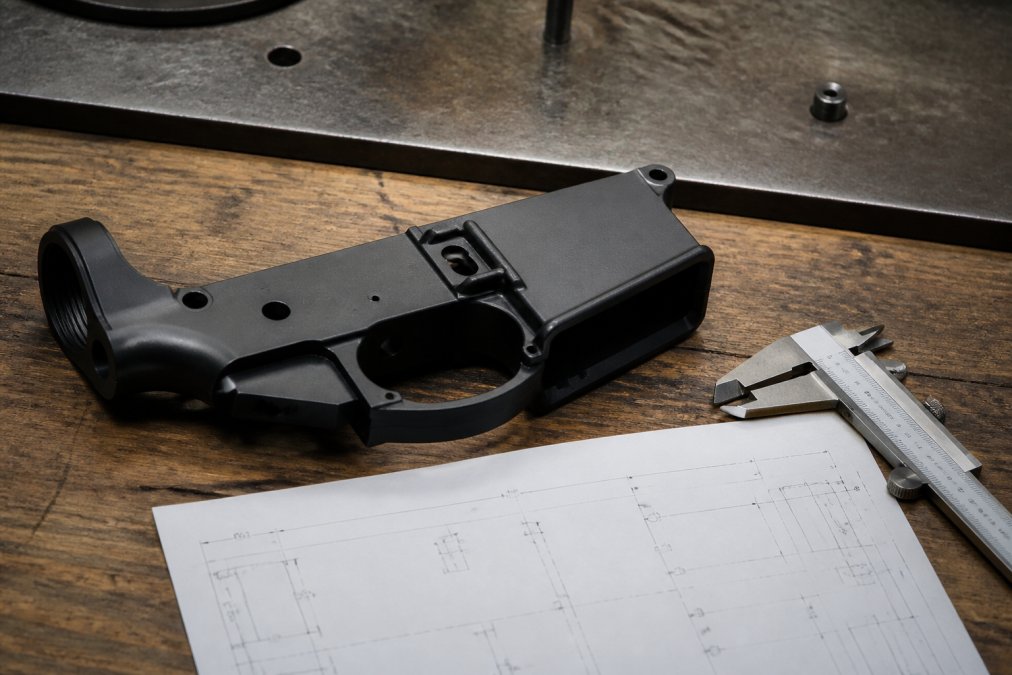
A mil-spec AR-15 lower receiver is built to a technical data package specifying alloy, heat treatment, critical dimensions, and finish. The spec exists so parts from different production runs stay interchangeable, a receiver cut in one decade should accept an upper, magazine, and fire control group made in another.
7075-T6 Aluminum and Tensile Strength
The T6 designation refers to a heat treatment sequence, solution heat treating followed by artificial aging, that produces high tensile strength and dimensional stability. A forged 7075-T6 receiver starts as a billet compressed under extreme pressure, aligning grain structure and eliminating internal voids.
Technical Data Package and Dimensional Accuracy
The technical data package is the controlling document, defining hole diameters, pin locations, receiver extension thread pitch, and magazine well geometry. A receiver built to the TDP accepts standard magazines, fire control groups, and buffer tubes without fitting.
The Tolerance Numbers Most Guides Skip
“Mil-spec” gets thrown around as a vibe, but it resolves to a handful of measurable dimensions. The values below are nominal figures for the standard lower pattern, reference points, not a substitute for the controlling drawing.
| Feature | Nominal | Practical check |
|---|---|---|
| Pivot pin hole diameter | ~0.154 in | Pin should slide in with light finger pressure, no wobble |
| Takedown pin hole diameter | ~0.154 in | Same as pivot; slop here telegraphs as upper/lower play |
| Safety selector hole | ~0.125 in | Selector should rotate without grit or side-to-side slop |
| Hammer/trigger pin holes | ~0.154 in | Egg-shaped holes are a reject, not a break-in issue |
| Magazine well width | ~0.900 in at the lips | A USGI-spec magazine should drop free when the catch is released |
| Receiver extension thread | 1-3/16 x 16 | Threads should engage smoothly by hand before torque |
How to Actually Verify a Receiver
You do not need a machine shop to sanity-check a lower, calipers, a known-good magazine, and standard pins catch most problems.
- Measure the pin holes. Insert the caliper jaws into the pivot and takedown holes. If either reads meaningfully over nominal, the upper will wobble.
- Drop-test a magazine. Insert a USGI-pattern magazine with the bolt catch disengaged. It should seat with a firm push and drop free under gravity when released.
- Check the fire control pocket depth. With the receiver empty, a standard trigger and hammer should sit flush in their pockets without binding against the floor.
- Thread the receiver extension by hand. A mil-spec extension should start by hand and only need a wrench for final torque. Cross-threading by hand is a reject.
- Look at the selector detent channel. A burr here produces a selector that feels gritty or won’t click positively into safe and fire.
A common mistake is assuming any receiver marked “mil-spec” has been gauged against the TDP. Many are simply machined to a nominal drawing without verification. The consequence shows up later as a build that won’t accept certain magazines or develops upper/lower play.
Why the TDP Matters More Than the Label
The TDP is not a marketing document. It is why a lower bought today accepts an upper bought five years from now, and why one maker’s magazine fits another’s receiver. Skip gauging and the manufacturer bets nominal machining lands inside tolerance by luck, when it doesn’t, the builder finds out at the range, usually with a magazine that won’t drop.
Forged vs Billet Lower Receiver: Which Builds Better?
Forged receivers are stronger per unit of weight and closer to the original spec; billet receivers offer more design freedom and sharper looks. Neither is universally better, they serve different priorities.
| Feature | Forged Receiver | Billet Receiver |
|---|---|---|
| Starting material | 7075-T6 forging | Solid aluminum block |
| Grain structure | Continuous, aligned | Interrupted by machining |
| Weight | Lighter | Heavier |
| Design flexibility | Limited to forging dies | High |
| Typical cost | Lower in volume | Higher |
| Best for | Standard builds, clone projects | Custom builds, ambi controls |
Mil-Spec vs Commercial Buffer Tube: The Real Difference
The difference between a mil-spec and commercial buffer tube comes down to the receiver extension’s outer diameter and rear angle. A mil-spec tube measures slightly smaller, and the two are not interchangeable.
The thing nobody tells you about buffer tubes is that the diameter difference is small enough to be missed by eye. Measure with calipers before you buy a stock. A mil-spec tube typically measures near 1.148 inches at the rear, while commercial runs closer to 1.168 inches.
The ‘Mil-Spec’ Marketing Fallacy: What Labels Hide
Mil-spec has become a marketing term as much as a technical one. Plenty of parts carry the label without being manufactured to a government technical data package, and no consumer-facing body checks the claim on retail products. The label describes an intent, not a verified outcome.
Here is what the label does not tell you:
- Whether the receiver was actually gauged against the TDP or just machined to a nominal drawing
- Whether the aluminum is genuinely 7075-T6 or a lower-grade substitute
- Whether the anodizing meets a hardcoat standard or is a thin cosmetic finish
- Whether the fire control group pockets were cut to the correct depth
- Whether the receiver extension threads were cut to the correct class of fit
Surface Finish: Where the Label Quietly Fails
Finish is the most under-discussed part of the mil-spec conversation, and where many receivers quietly fall short. The standard finish for a mil-spec lower is a hardcoat anodize, commonly called Type III, applied to a specified thickness. Type III produces a dense, wear-resistant oxide layer that penetrates and builds on the aluminum surface, protecting the pivot pin holes, takedown lugs, and magazine catch from galling after thousands of cycles.
A few practical tells:
- Type III typically has a slightly chalky or matte texture and can show a faint bronze or gray cast on some alloys.
- Type II tends to look glossier and more uniform, which is why it photographs well in product listings.
- Neither finish is a substitute for correct machining. A beautifully anodized receiver with out-of-spec pin holes is still out of spec.
Alloy Claims and How to Pressure-Test Them
“7075-T6” is easy to print on a spec sheet and hard to verify without a lab. A few signals separate a real claim from a marketing one:
- Consistency across the product line. A maker that uses 7075-T6 on one receiver and 6061 on the next is telling you something about how they think about the label.
- Willingness to state the heat treat. “7075” alone is not the same as “7075-T6.” The temper is the part that produces the strength.
- Willingness to state the finish standard. “Hardcoat anodized” is vague. “Type III hardcoat” is specific.
- Willingness to answer the gauging question. A straight answer about whether the receiver was checked against a TDP tells you more than any label.
When a listing says “mil-spec” but will not say “7075-T6,” “Type III hardcoat,” or “gauged to TDP,” treat the label as decoration. The absence of specifics is itself information.
Why a Good Commercial Receiver Can Beat a Bad ‘Mil-Spec’ One
What most guides miss is that a well-machined commercial receiver from a reputable maker often outperforms a poorly made “mil-spec” one. The label is a starting point, not a guarantee. A receiver cut to a nominal drawing on worn tooling, finished with a cosmetic anodize, and never gauged can carry the mil-spec name and still wobble, feed poorly, or fight the shooter on every magazine change.
A Short Buyer’s Framework
When comparing two receivers at similar price points, weigh them in this order:
- Machining quality, pin holes round and on size, magazine well clean, fire control pocket square.
- Finish standard, Type III hardcoat beats Type II cosmetic every time.
- Alloy and temper, 7075-T6 stated explicitly, not implied.
- Verification, a seller who can tell you how the receiver was checked.
- Label, last, not first.
How to Choose an AR-15 Lower Receiver That Fits Your Build
Choose based on your build’s purpose, not the label. A clone build benefits from a forged receiver with correct markings and a mil-spec buffer tube; a custom build with ambidextrous controls may call for billet; a budget build can use either if the critical dimensions are correct.
Visual Inspection Checklist Before You Buy
Run through this before committing to any receiver:
- Confirm the alloy is stated as 7075-T6, not just “aluminum”
- Check that the magazine well accepts a standard magazine without force
- Verify pivot pin and takedown pin holes are round and correctly sized
- Inspect the fire control group pocket for clean machining and correct depth
- Look for a hardcoat anodized finish, not a thin cosmetic coat
- Confirm the buffer tube thread pitch matches your receiver extension
- Check for burrs or tool marks around the bolt catch and trigger guard
- Ask whether the receiver was gauged against a technical data package
The single most useful question to ask any seller is whether the receiver was gauged against a technical data package. A straight answer tells you more about quality than any mil-spec label.
The hard part of any build is not picking a receiver, it is finding parts that fit together without a bench full of files. Polymer Pew offers MKE lowers tested for variant compatibility, full metal kits using anodized aluminum housings and hardened stainless internals, and drop-in super safety kits and flat triggers. Get started with Polymer Pew and build something that runs the first time.
Frequently Asked Questions
What does mil-spec mean for an AR-15 lower receiver?
Mil-spec means the lower was built to a government-issued technical data package: 7075-T6 aluminum, specified tolerances, and a defined surface finish. In practice, most civilian lowers labeled mil-spec follow those dimensions for the magazine well, pivot pin, takedown pin, and buffer tube threads. It does not mean the receiver was made for the military, and it does not guarantee better fit than a well-machined non-mil-spec lower.
Are all mil-spec lower receivers compatible with every upper?
No. Mil-spec refers to the lower’s dimensions, not the upper’s. A mil-spec lower will accept most standard uppers because the pivot pin and takedown pin locations follow the same pattern, but some billet or clone uppers use proprietary lug geometry. Check the upper’s fitment notes before buying. Interchangeability is about matching pin spacing and lug depth, not the mil-spec label alone.
What is the difference between mil-spec and commercial buffer tubes?
Mil-spec buffer tubes have a slightly smaller outer diameter and a different thread profile than commercial tubes. The receiver extension diameter decides which stock will slide on: a mil-spec stock will not fit a commercial tube without wobble or force. If you already own a stock, match the tube to it. Buying the wrong one means the stock either rattles or will not seat, and returns get complicated once the tube is torqued on.
Does mil-spec guarantee higher quality for a lower receiver?
No. Mil-spec sets a floor for dimensions and material, not a ceiling for quality control. Two lowers can both claim mil-spec and still differ in machining, anodizing, and fit and finish. A forged receiver from a shop that checks tolerances can beat a sloppy ‘mil-spec’ lower. Look at surface finish, pin hole alignment, and how the magazine well seats a magazine before trusting the label.
Is a forged lower receiver always mil-spec?
Not automatically. Forging is a manufacturing method, not a specification. A forged receiver still has to be machined to the correct dimensions and finished to the right surface standard to meet mil-spec. Plenty of forged lowers are sold as commercial spec. The forging process gives better grain structure and tensile strength than casting, but the final tolerances come from the machining, not the forge.
What are the critical dimensions of a mil-spec lower receiver?
The dimensions that matter most are the pivot pin and takedown pin hole spacing, the magazine well opening, the buffer tube thread pitch, and the fire control group pocket depth. These decide whether your upper, magazines, buffer tube, and trigger drop in without modification. A receiver that is off by even a few thousandths on pin spacing can bind an upper or cause a loose fit that shows up as accuracy problems later.