Last Updated: November 16, 2026
Quick Summary
The best MP5 optic mounts depend first on fitment to your receiver or clone, then on the optic height you need. Claw mounts such as the Midwest Industries MP5/MP5K NV mount suit night-vision builds, while low-profile options such as the MFI Ultra-Low Mount suit close-quarters setups. Confirm your rail and variant before ordering any MP5 optic mounts.
- Measure your rail’s cross-slot width and top width before ordering any claw mount.
- Measure rail-to-optic-centerline height with calipers after installation to confirm your sight picture.
- Choose a tall mount if you need a usable co-witness with your iron sights.
- Confirm the mount is stated to fit your specific variant or clone, not just MP5 generally.
- Verify current pricing with the manufacturer, since prices for these mounts weren’t reliably available.
Table of Contents
- Why Your MP5 Optic Mount Choice Matters
- How We Compared the Seven MP5 Optic Mounts
- Best MP5 Claw Mount Options
- MP5 Low-Profile Optic Mount Picks
- Tall Mounts and Co-Witness With Iron Sights
- Checking MP5 Optic Mount Compatibility With Clones
- Choosing Your MP5 Mount and Ordering From Poly Pew
- Frequently Asked Questions
Choosing an optic mount for an MP5-style platform looks simple until you try to fit one. The mount has to match the rail, clear the charging handle, and hold zero through recoil. A bad choice means a wobbling sight, a shifted zero, or hardware that won’t seat on your clone. Here is a look at seven MP5 optic mounts that are commonly discussed for MP5 and clone builds.
Here’s our short answer: match the mount to your platform first, then to your optic height. Fitment decides whether the rest of the build works at all.
Why Your MP5 Optic Mount Choice Matters
An optic mount is the only thing standing between a red dot and a zero you can trust. On an MP5 platform, that job is harder than on a standard carbine because the receiver geometry, rail layout, and clearance vary between variants and clones. A mount that works on one receiver can sit crooked on another.
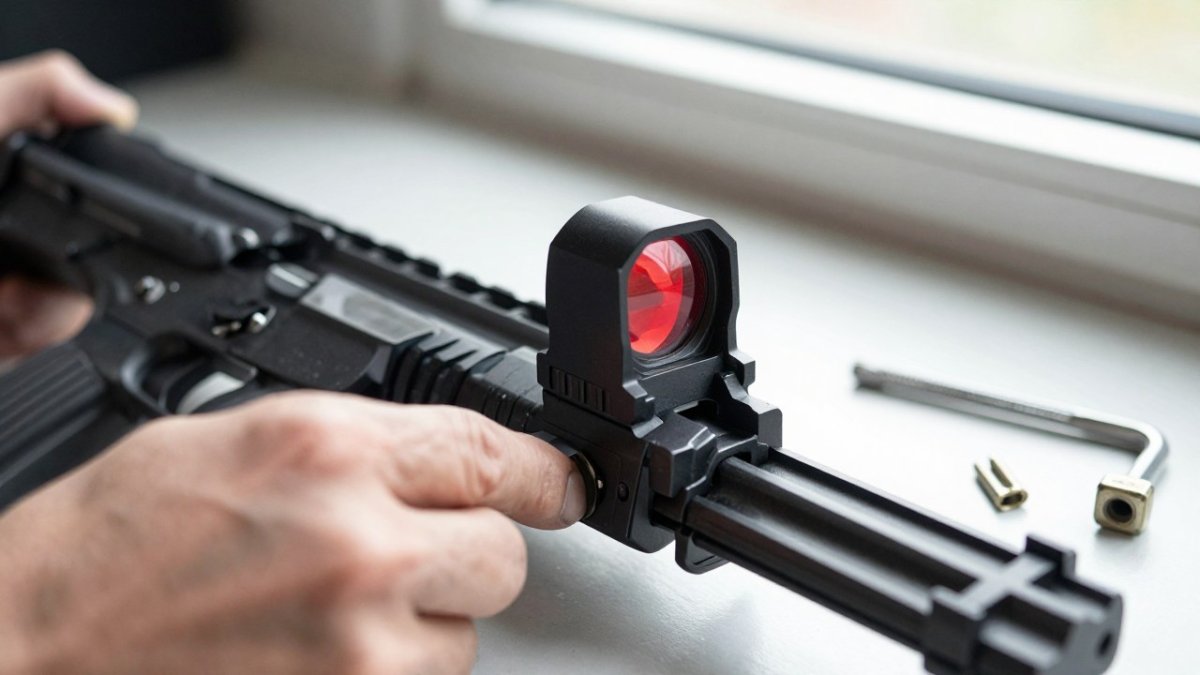
The practical risks are predictable: a loose mount that loses zero, a mount that interferes with the charging handle, and a mount height that puts the optic too far from your iron sights. Each one is avoidable if you check fitment before you order.
How We Compared the Seven MP5 Optic Mounts
The mounts below are compared on platform and rail fit, mount height, optic compatibility, and what each mount is best suited to. Where published specifications are thin, that is noted. Pricing for these third-party mounts isn’t reliably available in the sources reviewed, so check each manufacturer for current prices.
| Mount | Mount Height | Best For | Price |
|---|---|---|---|
| Midwest Industries MP5/MP5K NV Optic Mount | Not specified | NV-compatible MP5/MP5K builds | Check manufacturer |
| B&T MP5 Optic Mount | Not specified | Established MP5 mount makers | Check manufacturer |
| MFI Ultra-Low Mount | Ultra-low | Low-profile setups with an Aimpoint-type optic | Check manufacturer |
| Midwest Industries Ultimate MP5 Mount | Not specified | Midwest Industries buyers | Check manufacturer |
| Infitech MP5 Mount | Low-profile | Aimpoint T2 setups | Check manufacturer |
| Scalarworks LEAP 1.57″ Mount | 1.57 inches | Aimpoint-type optics at a set height | Check manufacturer |
| Shield SMS/RMS Mount | Not specified | Shield SMS- or RMS-pattern optics | Check manufacturer |
Best MP5 Claw Mount Options
Claw mounts clamp onto the receiver’s integral rail or a welded-on 1913 Picatinny segment rather than bolting through it. On an MP5-style platform that matters because the receiver top is narrow and the charging handle sits forward on the left side, so a claw design that tightens from the side can crowd the cocking tube or sit off-center if the rail is out of spec. The trade-off is straightforward: claw mounts install and remove quickly and usually return close to zero, but they depend on a precise rail fit. Measure your rail’s cross-slot width and top width before you order, and confirm the clamp is stated to fit your specific variant or clone.
Midwest Industries MP5/MP5K NV Optic Mount. This is the claw-style option to look at first if you run night vision. Midwest Industries describes it as an NV optic mount engineered for the MP5/MP5K, and it is one of the few mounts in this category with a manufacturer-stated night-vision use case rather than a generic “fits MP5” claim. Mount height, weight, and current price are not always published, so verify those directly with the manufacturer before you commit. If you need a known centerline height for co-witness planning, ask for it in writing.
B&T MP5 Optic Mount. B&T is a maker of MP5 optic mounts. Its MP5 mounts are described as a clamp-on design for the receiver rail. As with the Midwest unit, published height and weight figures are thin in the sources reviewed, so confirm the interface and clamp dimensions against your rail.
Battle Steel MP5 mounts.
What to check on any claw mount before you buy:
- Clamp style and whether it tightens from the side or from below, and whether that clears your charging handle travel
- Stated rail interface (integral MP5 rail versus a 1913 Picatinny segment) and the cross-slot width it accepts
- Whether the manufacturer lists your variant or clone by name, not just “MP5”
- Fastener type and whether the clamp uses a torque spec you can repeat
- Whether the mount is stated to return to zero after removal
Watch out: a claw mount that clamps unevenly can tilt the optic and shift your zero between range sessions, so check that the clamp seats flush along the full rail length before you tighten it down.
MP5 Low-Profile Optic Mount Picks
“Low profile” is a marketing label, not a measurement. Two mounts sold as low-profile can differ by several tenths of an inch in optic centerline height, and that difference decides whether your red dot sits naturally over the bore or forces you to break your cheek weld. The useful number is the height from the top of the rail to the center of the optic, not the label on the box. Ask for that figure, or measure it yourself with calipers once the mount is installed.
MFI Ultra-Low Mount. MFI’s ultra-low mount is the lowest-profile option in this group and appears in documented MP5/AP5 configurations with an Aimpoint-type sight. The practical appeal is a sight picture close to the bore and close to the iron sights, which many MP5 owners find the most natural for close-quarters use. The trade-off is that an ultra-low mount leaves little room for a taller optic body or a flip-up magnifier, and it can make co-witness with iron sights difficult or impossible depending on your sight’s window height. Confirm the optic footprint the mount accepts before ordering, and check whether an adapter plate is required for your specific sight.
Infitech MP5 Mount. The Infitech MP5 mount is named as a low-profile option paired with an Aimpoint T2. The T2 footprint (Aimpoint Micro pattern) is one of the most common interfaces in this category, so if you run a Micro-pattern sight this is a straightforward pairing. As with the MFI unit, published height figures are not consistently available, so verify the centerline height and confirm the mount is stated to fit your variant or clone.
B&T low-profile option.
How to compare low-profile mounts without a spec sheet:
- Measure rail-to-optic-centerline height with calipers after installation; that number, not the label, tells you where your eye will sit
- Confirm the optic footprint (Aimpoint Micro/T2 pattern, Shield SMS/RMS pattern, or other) and whether a separate plate or adapter is needed
- Check clearance for the charging handle and the safety selector through full travel
- Decide whether you need co-witness; if you do, a true ultra-low mount may not give you a usable sight picture through the irons
- Confirm the mount is stated to fit your specific variant or clone, including .22 LR models, which can have different receiver geometry
Best for: owners running an Aimpoint Micro-pattern optic who want the lowest practical mount height and a sight picture close to the bore.
Skip if: you need a taller mount for a specific optic, a magnifier, or a usable co-witness with iron sights.
Watch out: an ultra-low mount can put the optic body so close to the receiver that the windage or elevation turret bottoms out against the rail, so check turret clearance before you finalize the setup.
Tall Mounts and Co-Witness With Iron Sights
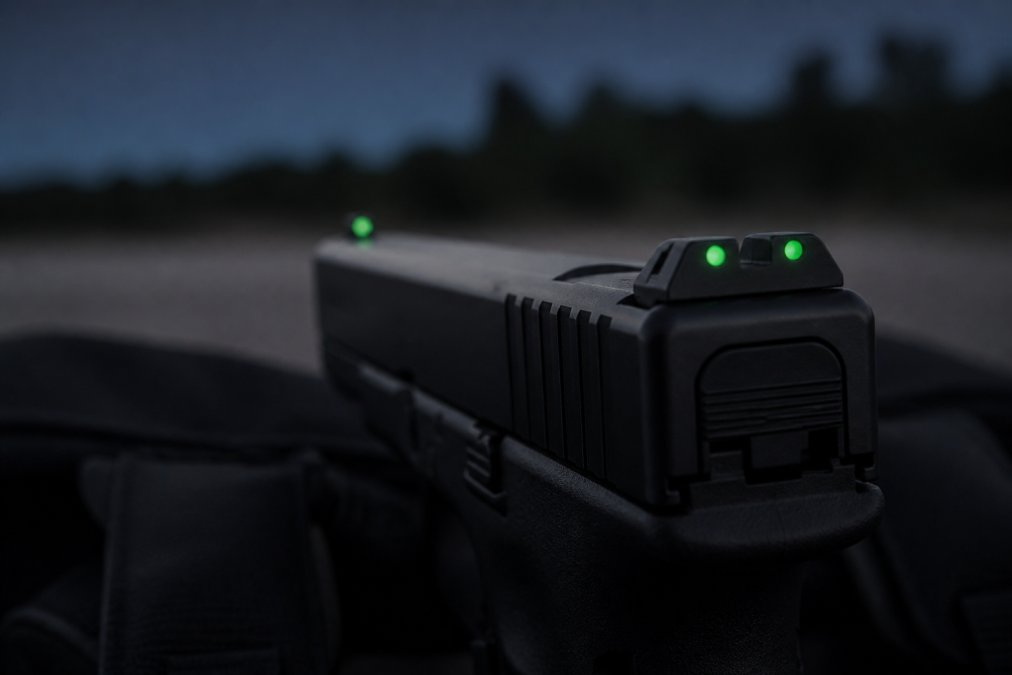
A taller mount raises the optic so your iron sights show through the sight window. This is called co-witnessing, and it gives you a backup sight if the optic fails. Not every MP5 owner needs it, but if you rely on your irons, mount height is the number to get right.
Checking MP5 Optic Mount Compatibility With Clones
Clones are where fitment gets unpredictable. Receiver tolerances, rail dimensions, and clearances differ between clone makers, so a mount that fits a genuine MP5 may not seat cleanly on a clone. Measure before you buy, and ask the seller which platforms the mount has been checked on.
Compare your receiver against the mount’s stated platform before ordering.
What to Verify Before You Buy
Run through this checklist before you order:
- Confirm the mount is stated to fit MP5 or MP5K, and your variant or clone
- Check the rail interface and whether it is a claw or a bolted design
- Confirm clearance around the charging handle
- Decide between low-profile and tall based on whether you need co-witness
- Confirm the optic footprint and any adapter plate you need
- Check whether the mount is NV-compatible if you run night vision
- Verify current price and availability with the manufacturer
Choosing Your MP5 Mount and Ordering From Poly Pew
Start with fitment, then height, then optic. If you’re building or upgrading an MP5-style platform, Poly Pew offers components for MP5-style and clone builds, including MKE lowers and kit parts. Browse the AR-15 category for related mounting hardware and platform-compatible options, and see the HK SP5K PDW complete kit if you want to confirm which platform your mounts fit before ordering.
For sight height and co-witness decisions, our durable pistol sights for low light review covers related sight options. If you’re verifying fit on a clone lower, check the MKE clone lower compatibility guide first.
Pricing for Poly Pew parts depends on configuration, quantity, and delivery, so check the current listing or request a quote before you order. Get your Flatties here!!!
Midwest Industries MP5/MP5K Optic Mounts launch announcement
Frequently Asked Questions
What is the best mount for MP5 optics?
The best MP5 optic mount depends on whether you need a low profile or co-witness with iron sights, and on whether your receiver is a factory MP5 or a clone. Low-profile mounts keep the optic centerline close to the rail for a faster sight picture, while taller mounts let you use iron sights behind the optic. Confirm the mount’s rail interface and fitment for your exact receiver before ordering. Poly Pew can help you match components to your build, and you should check current pricing directly on the Poly Pew website.
Will an MP5 optic mount fit an MP5 clone?
Many MP5 optic mounts fit clones, but clone receivers and rail dimensions vary, so fitment is not guaranteed. Check whether the mount lists your receiver style and whether it clears the charging handle and rail. Verify fit by measuring your rail before you buy, and expect possible minor fitting work on some clone builds. Confirm your specific receiver fits before ordering.
Can you co-witness iron sights through an MP5 optic mount?
You can co-witness iron sights through an MP5 optic mount if the mount height places the optic’s aiming point at the same level as your rear sight aperture and front sight post. Taller mounts are more likely to allow co-witness, while low-profile mounts usually leave the iron sights below the optic. Test your setup by lining up the front post through the optic window at your intended zero distance. Adjust mount height or choose a different mount if the sight picture does not line up.
What is the difference between a low-profile and tall MP5 optic mount?
A low-profile MP5 optic mount sits the optic close to the receiver, which keeps the sight line low and makes the setup more compact. A tall mount raises the optic, which can allow iron sights to co-witness but may slightly slow acquisition for some shooters. Choose low-profile for compact close-quarters use and tall mounts if you want a backup iron sight. Compare each mount’s stated height and sight-picture measurements before you decide.