Last Updated: October 28, 2026
Quick Summary
The best aftermarket trigger lubricants are light oils on pins, springs, and pivot points, with a thin grease or moly paste reserved for high-pressure sear and connector surfaces. Apply only a barely visible film, since over-lubrication is the most common cause of a sluggish reset and inconsistent trigger feel.
- Use oil on pins, springs, and small pivot points; use grease only on high-pressure sear and connector surfaces.
- Apply one drop of oil per pin and pivot point, then wipe away excess.
- Clean and relube every few hundred rounds, or after any dusty, wet, or sandy session.
- Thin oils migrate faster than greases, so keep light oil off sear faces.
- Never apply lubricant to the striker channel, firing pin, or safety plunger unless the manufacturer calls for it.
Table of Contents
- What Makes a Lubricant Right for Aftermarket Trigger Components?
- Gun Oil vs Gun Grease: Which Belongs in a Trigger Group?
- Lubricant Options for Aftermarket Trigger Components
- How to Lubricate a Trigger Mechanism Without Overdoing It
- Compatibility With Aftermarket Trigger Materials and Coatings
- Aftermarket Trigger Maintenance: Intervals, Migration, and Troubleshooting
- Safety Checks After Lubricating Trigger Components
- Upgrading Your Trigger Group: What to Check Before You Buy
- Frequently Asked Questions
What Makes a Lubricant Right for Aftermarket Trigger Components?
The best aftermarket trigger lubricants balance low friction with staying power, and they must suit the specific materials in your trigger group. This guide breaks down the best lubricants for aftermarket trigger components by contact point, material, and operating condition.
Here’s the tension most guides ignore: a trigger group is not a slide. It’s a set of small, precise contact surfaces under spring pressure, and too much lubricant is often worse than too little.
The Properties That Actually Matter
Lubricant viscosity is a fluid’s resistance to flow, and it decides whether an oil stays on a trigger bar or runs off into the frame. Beyond viscosity, four properties drive every choice:
- Staying power on vertical and sliding surfaces
- Film thickness under sear and connector pressure
- Material compatibility with polymer, aluminum, and coated steel
One contrarian data point worth knowing: TriggerTech’s lubrication guidance for Glock-pattern triggers states that lubrication is not necessary for its Zero Creep Technology triggers because the design expels debris from the engagement surfaces. That’s manufacturer guidance for one brand’s triggers, not a green light to run every aftermarket trigger dry. Check your own trigger maker’s instructions first.
Gun Oil vs Gun Grease: Which Belongs in a Trigger Group?
Use oil on pins, springs, and small pivot points; use grease only on high-pressure sear and connector contact surfaces. The gun oil vs gun grease decision comes down to pressure and speed, not brand loyalty.
Oil flows into tight clearances and returns to thin films after cycling. Grease stays put under load but traps dust and slows down in cold weather.
| Contact Point | Best Lubricant Type | Why | Application |
|---|---|---|---|
| Trigger bar and connector | Light oil | Low load, needs free movement | One drop, wiped thin |
| Sear engagement surfaces | Light grease or moly paste | High pressure point contact | Thin film only |
| Pins and pivot points | Light oil | Tight clearance, rotation | One drop each |
| Rails and friction areas | Oil or light grease | Sliding contact | Thin, even film |
| Springs | Light oil | Corrosion protection | Light coat |
Lubricant Options for Aftermarket Trigger Components
The market splits into two families, and matching the family to the contact point matters more than picking a favorite bottle. Here’s how the leading options shake out for aftermarket trigger lubricants.
Oils for Pins, Springs, and Small Pivot Points
Pew Pew Tactical’s gun oil and grease guide highlights M-Pro 7 LPX as a top standard gun oil, describing high lubricity, resistance to gumming over time, and a wide temperature range. That profile suits trigger pins and springs well.
For competition use, Zero Friction and Pro-Gold from Pro-Shot Products are positioned around high-round-count reliability and heat resistance. Pro-Shot’s competition gun oil comparison frames both as options for demanding use.
Mil-Comm TW-25B earned a favorable personal assessment in a broad comparative evaluation of 46 products. Day at the Range’s gun care product evaluation covers that comparison.
Greases for Sear and High-Pressure Contact Surfaces
Abbey Gun Grease LT2 is described in a grease roundup as intended for extreme-pressure applications, with triggers and sears explicitly named. Mil-Comm’s popular gun greases guide covers that listing. KEZE Gun Grease is described as reducing friction and preventing wear on metal parts.
How to Lubricate a Trigger Mechanism Without Overdoing It
The correct amount is a thin film you can barely see. Most practitioners find that a single drop of oil is enough for several pins, and a film of grease thinner than a sheet of paper is enough for a sear. The procedure below is deliberately conservative and works on most striker-fired and hammer-fired aftermarket trigger groups; always defer to your trigger maker’s instructions where they differ.
Step-by-Step Application
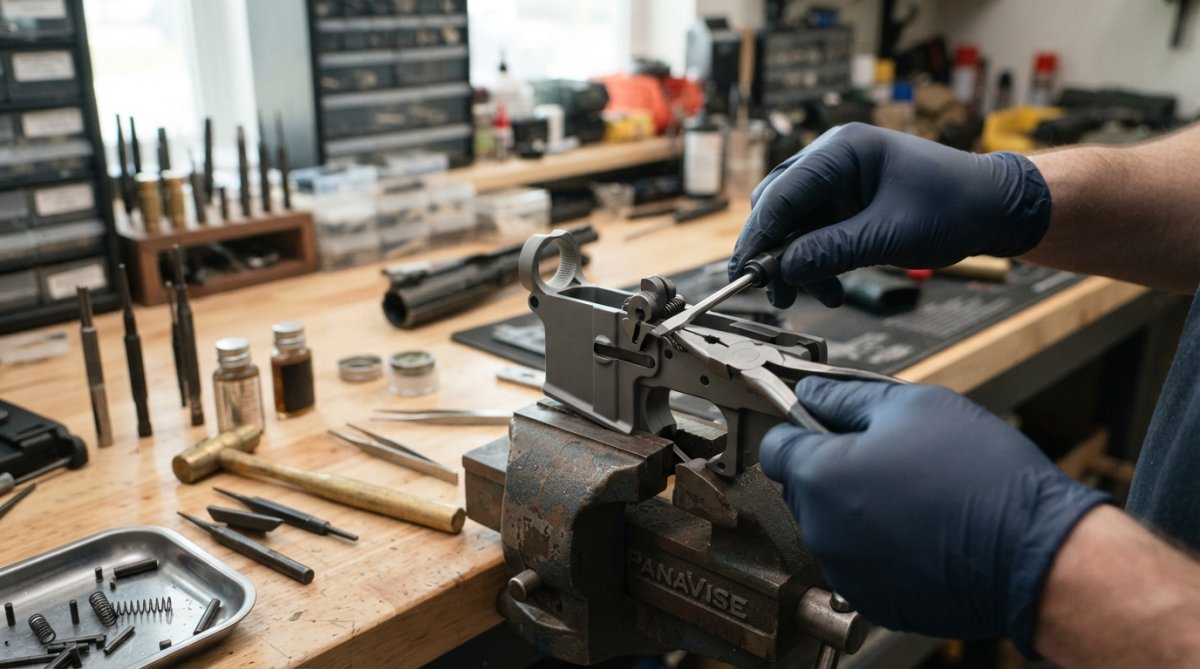
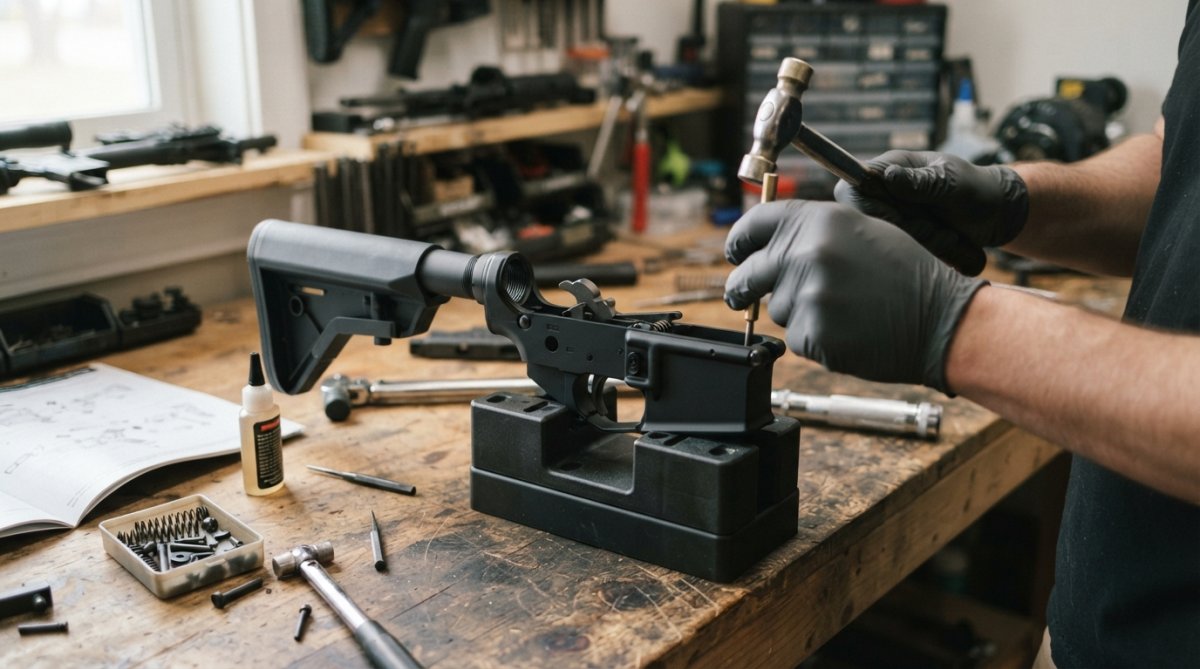
- Field-strip and separate the trigger group from the frame where the design allows. On drop-in trigger systems, remove the assembly per the manufacturer’s instructions. On AR-pattern rifles, separate the upper and lower and remove the trigger and hammer pins.
- Clean old lubricant and residue with a solvent and a soft brush, then dry fully. Residual solvent dilutes fresh lubricant and can carry grit into sear engagement.
- Identify the contact points before applying anything: trigger bar, connector, sear engagement surfaces, pins, pivot points, springs, and any rails or sliding surfaces. A bright light and a dry cycle or two will show you where metal actually rubs.
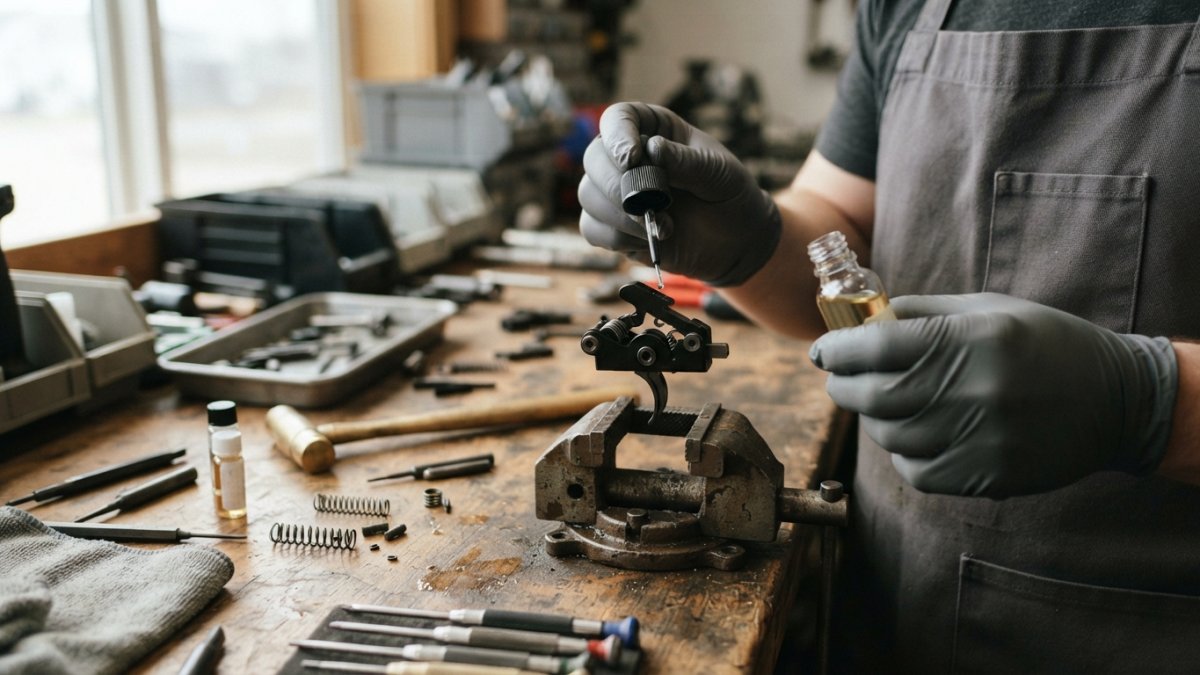
- Apply one drop of oil to each pin and pivot point. Use a needle applicator to place the drop precisely; a drop on the outside of the frame does nothing for the pin inside it.
- Apply one drop to the trigger bar and connector, then wipe away excess with a clean rag. The goal is a stain, not a puddle.
- Apply a thin film of grease to sear contact surfaces only. A common pattern is to touch a toothpick or applicator to the grease, then transfer that tiny amount to the sear face and spread it until it disappears.
- Cycle the action several times, then wipe any lubricant that migrates onto the frame, the connector, or the optics. Migration is easiest to catch immediately after application.
- Reassemble and run a function check before live fire. See the safety checks section below.
How Much Is Too Much?
Over-lubrication is the most common cause of a sluggish reset and inconsistent trigger feel. Warning signs include oil visible on the outside of the trigger group, grease squeezing out of the sear engagement, and a trigger that feels heavier after lubrication than before. If you see any of these, remove the excess with a rag and a dry brush before adjusting anything else.
Never apply lubricant to the striker channel, firing pin, or safety plunger unless the manufacturer explicitly calls for it. Oil in these areas can attract debris, slow lock time, or interfere with drop safety. When in doubt, run it dry and follow the manual.
Compatibility With Aftermarket Trigger Materials and Coatings
Lubricant compatibility with aftermarket trigger materials and coatings decides whether your trigger keeps its feel or turns gritty. Polymer frames, aluminum housings, and coated steel each react differently to the same bottle.
- Polymer frames: petroleum-based oils are generally fine, but some solvents attack certain polymers. Test on a hidden area.
- Aluminum: needs corrosion protection, so don’t run it bone dry.
- Coated steel and DLC: thin oils preserve the coating; abrasive pastes can wear it.
The thing nobody tells you about coated triggers: heavy grease can mask the coating’s low-friction benefit and make the pull feel inconsistent.
Aftermarket Trigger Maintenance: Intervals, Migration, and Troubleshooting
Aftermarket trigger maintenance should be a light clean and relube every few hundred rounds, or after any dusty, wet, or sandy session. But the interval matters less than what you inspect when you do it. This section covers how lubricant migrates, how temperature and environment change the choice, and how to tell a lubrication problem from an installation or wear problem.
Maintenance Intervals That Actually Work
- Every few hundred rounds: wipe down the trigger group, inspect for migration, and renew the thin film on pins and sear engagement.
- After any dusty, wet, or sandy session: clean and relube regardless of round count. Grit in a sear engagement changes pull feel faster than round count does.
- Before storage longer than a few weeks: apply a light corrosion-protective film to steel surfaces, then wipe off excess. Oil that sits and oxidizes can gum up.
How Lubricant Migration Works
Migration is the real enemy: oil creeps from pins into the sear engagement and changes pull feel. The mechanism is capillary action and vibration. Oil placed on a pin wicks along the pin-to-hole clearance and can travel into the sear and connector interface, where it dilutes the grease film and attracts grit. Thin oils migrate faster than greases; that is why a light oil belongs on pins but not on sear faces.
Environmental and Operating Conditions
Temperature, dust, moisture, and storage conditions all change which lubricant is right and how often to renew it.
- Cold weather: thick grease stiffens and can slow reset. Use a light oil or a low-temperature grease on sear engagement, and verify function at the coldest temperature you expect to shoot in.
- Hot weather and high round counts: thin oils can burn off or run. A slightly heavier oil or a light grease on high-pressure surfaces holds up better.
- Dust and sand: less lubricant is better. Excess oil traps grit; a dry or nearly dry trigger group often runs more reliably in abrasive environments.
Troubleshooting: Lubrication vs. Installation vs. Wear
When a trigger misbehaves, the cause is not always lubrication. Use this framework before you reach for a bottle:
- Sluggish or inconsistent reset: most often over-lubrication or migrated oil. Clean fully and relube minimally before adjusting anything. If reset problems persist, this trigger reset troubleshooting guide diagnoses and fixes them.
- Gritty or heavy pull that appears suddenly: often debris or dried lubricant in the sear engagement. Clean and inspect.
- Gritty pull that was present from installation: usually a tolerance, surface finish, or installation issue, not lubrication. Check fitment and contact patterns.
Keep a log of round count, cleaning dates, and lubricant used. A pattern of when a trigger starts to feel different is the fastest way to tell a lubrication interval problem from a wear or installation problem.
Safety Checks After Lubricating Trigger Components
Function and safety checks are non-negotiable after any trigger work. This reliability testing guide for aftermarket carry triggers covers function checks, safety testing, and live-fire protocols. Verify the following with the firearm unloaded and ammunition stored away:
- Confirm the trigger resets crisply through repeated dry cycles
- Check that the safety engages and disengages fully
- Perform a function check per the manufacturer’s instructions
Upgrading Your Trigger Group: What to Check Before You Buy
Before you buy, confirm fitment, materials, and pull consistency. A great lubricant can’t fix a trigger with sloppy tolerances.
Poly Pew builds aluminum MKE lowers, Super Safety kits, and drop-in trigger systems designed for compatibility and reliability, including budget-friendly kits for first-time builders.
**
**
Frequently Asked Questions
Should I use oil or grease on an aftermarket trigger?
Match the lubricant to the part. Use a light oil on pins, springs, and small rotating points where it can reach tight clearances and let parts move freely. Use a grease on high-pressure sliding surfaces such as sear engagement points, where a thin film stays put instead of running off. Many builders run a light oil on the pivot points and a small amount of grease on the sear contact, then wipe away anything that looks wet or pooled.
How much lubricant should I apply to trigger components?
Less than most people expect. A thin film is the goal, not a visible coating. One drop on a pin or pivot point and a light smear on a sear surface is usually enough. Excess oil attracts dust and grit and can migrate into the trigger group, which changes feel and can slow reset. After applying, wipe away any excess with a clean rag so the surfaces look damp rather than wet.
Can too much lubricant affect trigger performance?
Yes. Pooled oil collects dust and residue, and in cold conditions a heavy layer can thicken and slow the mechanism. Excess lubricant can also migrate onto surfaces that should stay dry, which may affect reset and trigger feel. Apply a light film, wipe away excess, and recheck function with a dry-fire and safety check before live fire. If the trigger feels sluggish or gritty after lubricating, remove the excess and start over with less.
Do I always need to follow the trigger manufacturer’s lubrication instructions?
Follow them first. Some makers give specific guidance, and at least one aftermarket trigger maker states that lubrication is not necessary for its own designs because the geometry clears debris from the engagement surfaces. That is manufacturer guidance for that product, not a rule for every trigger. When instructions are unclear, use a light film of oil on pins and a thin smear of grease on high-pressure contact points, then confirm function with a safety check.
A trigger group only performs as well as its setup, and the right components make lubrication and maintenance far simpler. Poly Pew offers aluminum MKE lowers, Super Safety kits, and drop-in trigger systems built for compatibility and reliability, with options for first-time clone builders and budget-conscious upgrades. Get your Flatties here and build a trigger group that runs clean from the first range session.