Quick Summary
A firearm function test checks that a gun cycles, locks, and releases the way its maker designed it to. Run it with the gun unloaded, after assembly, part swaps, cleaning, or any odd behavior, and stop if anything feels wrong.
- Remove all magazines and ammunition from the room before you start any check.
- Confirm the chamber is empty visually and by feel every single time.
- A trigger that fails to reset points to a disconnector, trigger-bar, or spring issue.
- Never load or carry a gun whose safety fails to click positively.
- Run the full function check again after every cleaning session before loading.
Table of Contents
- How to Perform a Firearm Function Test Safely
- What a Firearm Function Check Checks and When to Run One
- Safety Prerequisites and Stop Conditions Before You Start
- Step-by-Step Pistol Function Check
- Step-by-Step AR-15 Function Check
- Firearm Function Check After Cleaning or Reassembly
- Function Check Versus Test Firing: Knowing the Difference
- Troubleshooting a Failed Function Check and Your Next Step
- Frequently Asked Questions
How to Perform a Firearm Function Test Safely
Last Updated: November 6, 2026
A firearm function test checks that a gun cycles, locks, and releases the way its maker designed it to. Poly Pew builds high-performance firearm components and accessories. The steps below walk you through that routine for pistols and AR-style rifles, along with the safety rules that come first.
Under California law, the Firearms Safety Certificate written test requires a 75% minimum passing score (California Department of Justice Firearms Safety Certificate Study Guide). That is a reminder that safe handling is a learned skill, not a guess. Work through each step in order, and stop if anything feels wrong.
What a Firearm Function Check Checks and When to Run One
A function check confirms the basic controls work: the trigger resets, the slide or bolt cycles, the safety engages and disengages, and the firing pin is not binding. You run one after you assemble a gun, after you swap a part, after cleaning, and any time the gun behaves oddly.
Federal forensic guidance treats function testing as a prerequisite. NIST Standard Test Method for the Examination and Testing of Firearms states that function testing should be performed before any forensic test firing, unless specific case circumstances dictate otherwise.
Run a function check when:
- You finish a new build or a drop-in trigger install
- You reassemble after cleaning or lubrication
- A part is replaced or adjusted
- The trigger feels gritty, heavy, or inconsistent
- The gun fails to cycle, lock back, or reset
Safety Prerequisites and Stop Conditions Before You Start
Do not skip this section. Most function-check accidents happen because someone rushed the first step.
Before you start:
- Work in a clear area with a safe backstop, away from people and ammunition
- Remove all magazines and ammunition from the room
- Point the muzzle in a safe direction at all times
- Keep your finger off the trigger until you are ready to press it
- Use the manufacturer’s manual for your exact model
Stop immediately if:
- The gun has any round in the chamber or magazine you did not expect
- The slide, bolt, or cylinder will not move freely
- The trigger does not reset, or you feel binding or rubbing
- A part looks cracked, worn, or out of spec
- You are tired, distracted, or unsure of a step
Watch out: Never dry-fire a gun you have not confirmed is unloaded. Check the chamber visually and by feel every single time.
Step-by-Step Pistol Function Check
Pistol designs vary widely, a striker-fired polymer pistol, a hammer-fired double-action/single-action, and a 1911-pattern gun each have different controls and internal safeties. The sequence below is a general framework; confirm each step against your model’s manual before you perform it. If your manual specifies a different order or omits a step, follow the manual.
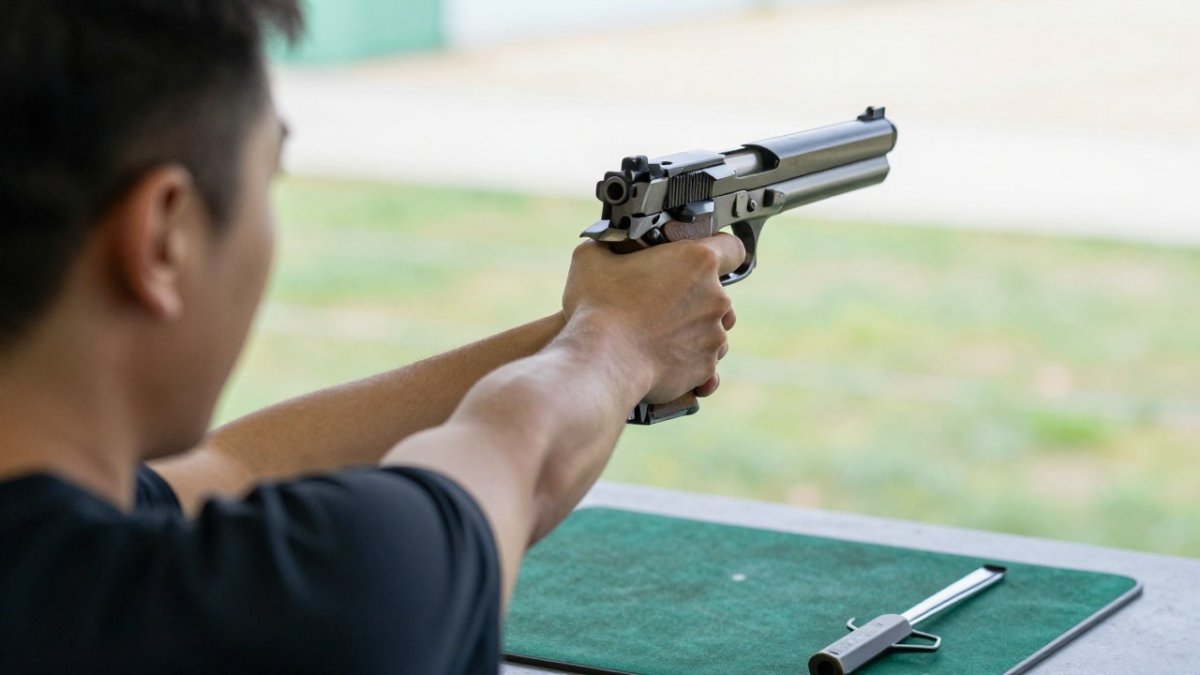
- Clear the pistol. Remove the magazine, then lock the slide back. Look into the chamber and feel it with a pinky to confirm it is empty. On pistols with a magazine disconnect, reinsert an empty magazine only if the manual requires it to release the slide, otherwise keep all magazines out of the room.
- Check the trigger and reset. Press the trigger slowly. You should feel a smooth take-up, a defined wall, and a clean break. Keep the trigger held to the rear, then release it and confirm you feel and hear the reset. A trigger that fails to reset, or that resets only after a jiggle, points to a disconnector, trigger-bar, or spring issue.
- Test the slide stop and lock-back. Lock the slide back on an empty magazine (or via the slide stop, per your model). Release it and confirm the slide returns fully forward without drag. On many pistols the slide stop is also the takedown lever, do not force it past its detent.
- Test the manual safety or decocker. If your pistol has a manual safety, engage and disengage it several times with the hammer or striker cocked. Each click should be firm and positive, and the trigger should not release the sear while the safety is engaged. On a decocker, confirm the hammer or striker drops safely without contacting the firing pin.
- Inspect the firing pin safety. With the slide off per the manual, confirm the firing pin moves freely and that its block or plunger releases only when the trigger is held. A firing pin that protrudes with the trigger at rest is a stop condition, do not load the gun.
- Dry-fire only if the manual allows it. Many striker-fired pistols are safe to dry-fire; some rimfire and certain hammer-fired models are not. Check the manual first, and use a snap cap if the maker recommends one.
Watch out: A pistol that passes every check on the bench can still fail under recoil. The function check verifies mechanical operation, not live-fire reliability, those are separate tests.
The table below summarises the pistol function check steps, so you can see each step’s action and what to watch for at a glance.
| Step | What to do | What to look for |
|---|---|---|
| Clear the pistol | Remove magazine, lock slide back, check chamber | Chamber is empty |
| Check trigger and reset | Press slowly, then release | Smooth take-up, clean break, audible reset |
| Test slide stop and lock-back | Lock slide back, then release | Slide returns fully forward without drag |
| Test manual safety or decocker | Engage and disengage with hammer or striker cocked | Firm, positive clicks |
| Inspect firing pin safety | Confirm firing pin moves freely | Pin does not protrude with trigger at rest |
| Dry-fire only if manual allows | Check manual first, use snap cap if recommended | Follow the manual |
Step-by-Step AR-15 Function Check
- Clear the rifle. Remove the magazine, pull the charging handle to the rear, and lock the bolt back. Visually and physically check the chamber.
- Check the bolt catch. Press the bolt catch with the bolt locked back. The bolt should release and drive forward.
- Test the safety selector. Cycle it between safe and fire, confirming a clear detent each time.
- Check the trigger reset. With the hammer cocked, press the trigger slowly, then release it. You should feel a crisp reset point.
- Inspect the hammer and disconnector. Confirm the hammer engages the disconnector and releases cleanly.
- Cycle the action. Work the charging handle a few times. The bolt carrier should move smoothly with no rubbing.
Firearm Function Check After Cleaning or Reassembly
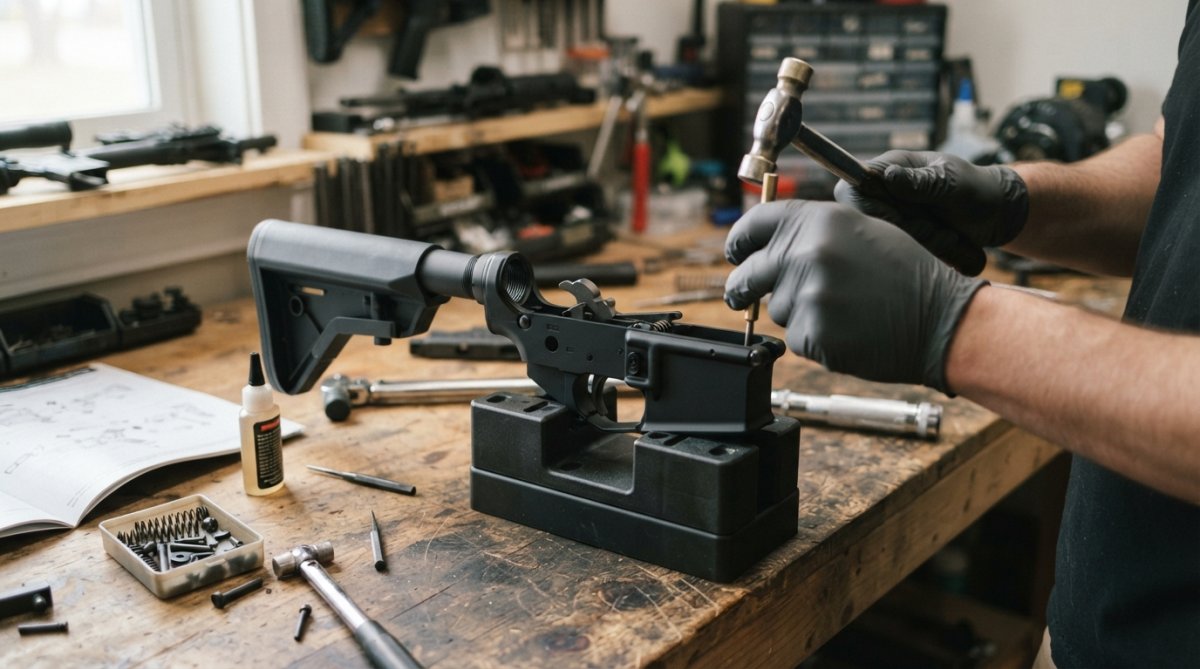
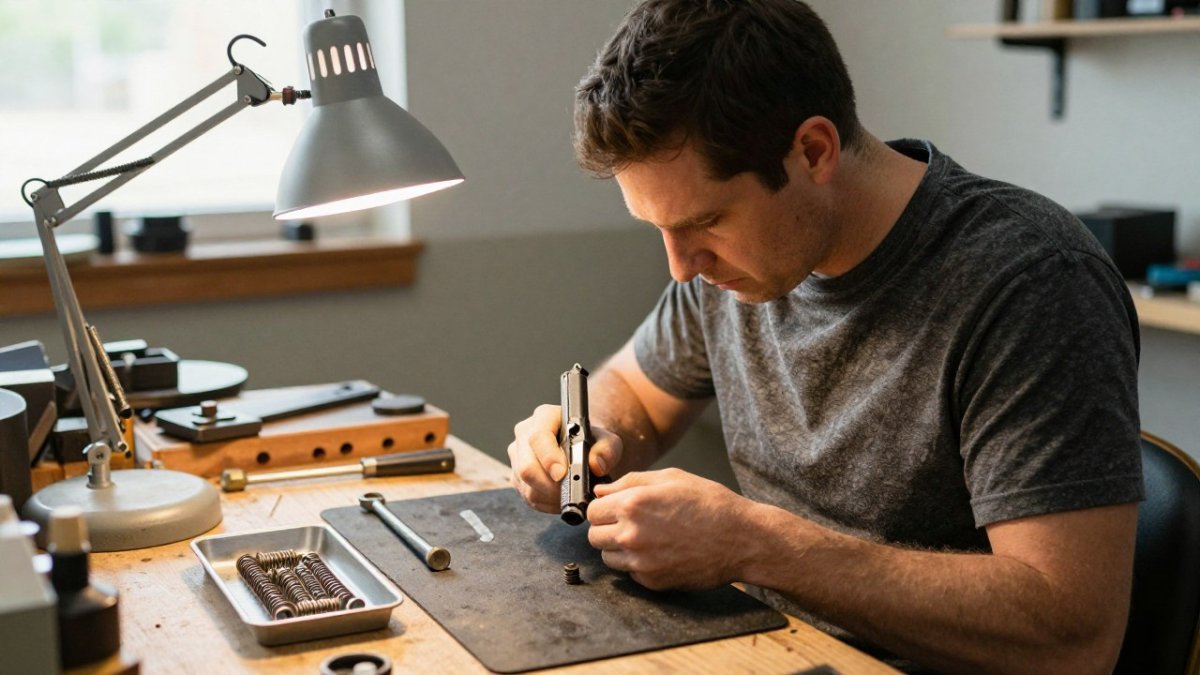
Cleaning removes oil and debris, and reassembly is where most mistakes happen. After every cleaning session, run the full function check again before you load the gun.
- Confirm all pins and springs sit in their correct positions
- Make sure lubrication is light and not dripping into the trigger group
- Check that the safety still engages after reassembly
- Verify the trigger resets the same way it did before cleaning
If something feels different, take the gun apart again and check your work. A missing spring or misplaced pin can change how every control behaves.
Function Check Versus Test Firing: Knowing the Difference
A function check is a mechanical check, done with the gun unloaded. Test firing is live fire, done to measure reliability or to collect evidence.
The forensic standard is clear on this point. National Institute of Justice Firearms Examiner Training: Test Firing explains that standardized test firing requires function testing first, to confirm the firearm operates as designed and the barrel is clear of obstructions.
For most owners, a function check is the right tool. Live-fire reliability testing belongs to a controlled range session, with a clear plan and proper safety setup.
Troubleshooting a Failed Function Check and Your Next Step
When a check fails, do not keep pulling the trigger to see what happens. Stop, unload, and find the cause. A failed check means the gun is not operating as designed, it is not a suggestion to try harder.
What a failure tells you:
- Trigger will not reset: The disconnector, trigger bar, or trigger spring is not re-engaging the sear. This can indicate that the trigger is not seated fully or the pins are walking. Do not fire the gun until reset is restored.
- Trigger pull feels wrong: A gritty or heavy pull can indicate a burr, a mismatched sear angle, or contamination in the trigger group.
- Drop-in trigger acts up after install: Re-check fit, pin seating, and hammer engagement. A trigger that worked on the bench but fails after cycling usually has an alignment or tolerance problem, not a defective part.
- Safety will not engage or disengage: Stop. A safety that binds or fails to click positively is a stop condition, do not load or carry the gun.
- Slide or bolt will not move freely: Look for a misaligned pin, a missing spring, or debris in the action. Do not force the slide forward.
- Cleaning or reassembly caused the problem: Follow the manufacturer’s reassembly sequence and confirm every pin and spring is in its correct position before you run the check again.
What not to do next: Do not cycle live ammunition through a gun that failed a bench check. Do not attempt to “shoot it loose” or force a part into place. Do not substitute a part from another gun without confirming compatibility.
When to stop and seek service: If the gun still fails after you have rechecked assembly, lubrication, and part seating, stop using it. Contact a qualified gunsmith or the manufacturer rather than forcing a repair. A gun that fails a function check should not be carried, stored loaded, or used for defense until the cause is corrected and the check passes.
Browse the full range on our site and pick the parts that match your build.
Frequently Asked Questions
How do you perform a function check on a pistol?
Start by confirming the pistol is unloaded: remove the magazine, lock the slide back, and visually and physically check the chamber. Point the muzzle in a safe direction at a clear backstop. Then work through the trigger, the manual safety or decocker, the slide stop, and the firing pin safety, confirming each one works as the manufacturer’s manual describes. If anything binds, sticks, or behaves inconsistently, stop and investigate before any live fire. Keep the procedure the same each time so you can spot changes.
How do you perform a function check on an AR-15?
With the magazine removed and the bolt carrier group locked back, confirm the chamber is empty. Check the safety selector through its full travel, then test the trigger reset by pressing and releasing it while watching the hammer. Lock the bolt back with the bolt catch, release it, and confirm it drops smoothly. Look for binding, excessive wobble, or a bolt that fails to lock back. Consult your rifle manufacturer’s manual for model-specific steps, since upper and lower combinations vary.
What should you do if a firearm fails a function check?
Do not fire it. Make the firearm safe, document exactly which step failed, and check for obvious causes such as debris, fouling, a worn spring, or an incorrectly assembled part. Consult the manufacturer’s manual for the failed component. If the problem persists or you are unsure of the cause, have a qualified gunsmith inspect the firearm before further use.
What is the difference between a function check and test firing?
A function check is a manual inspection of controls and mechanical operation performed with the firearm unloaded. Test firing involves discharging the firearm to evaluate live reliability, accuracy, or ballistic behavior, and it requires its own safety controls, a suitable range, and proper eye and ear protection. A function check tells you the mechanism works; test firing tells you how it performs under live conditions.