Table of Contents
- What Adjustable Trigger Pull Weight Actually Changes
- How Trigger Pull Weight Affects Accuracy
- Adjustable vs Fixed Trigger Pull Weight
- Lighter Trigger Pull Pros and Cons
- Trigger Adjustment Safety: Staying Inside Manufacturer Limits
- Matching Pull Weight to Your Use Case
- Measuring and Verifying Your New Pull Weight
- Frequently Asked Questions
Last Updated: October 18, 2026
What Adjustable Trigger Pull Weight Actually Changes
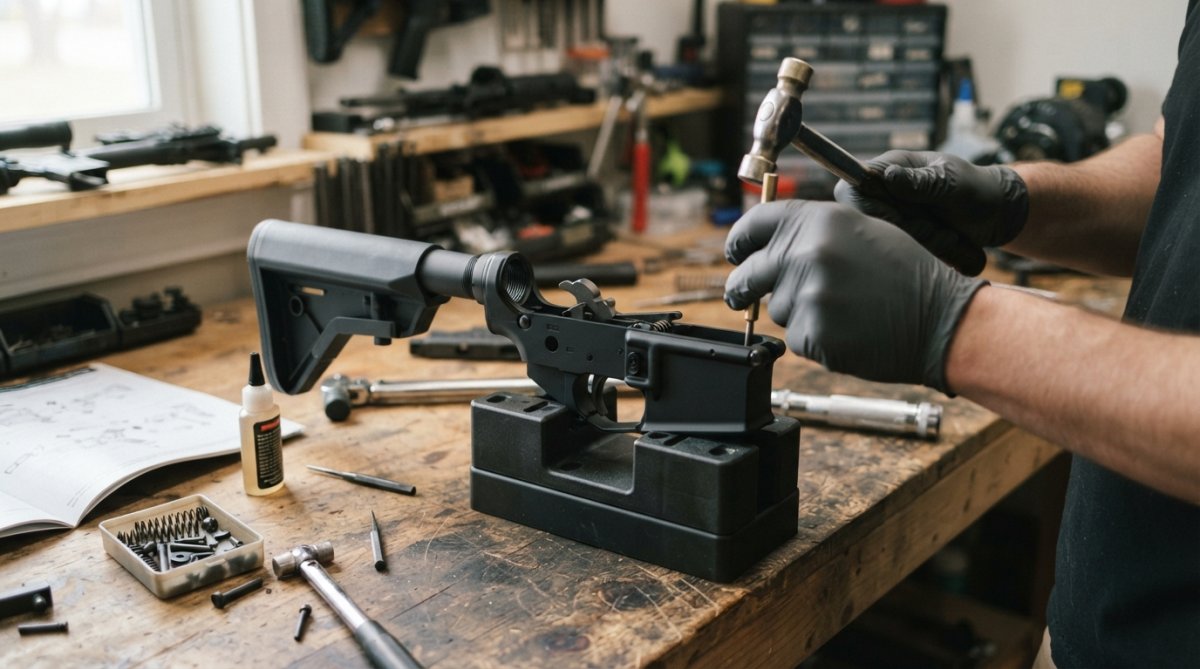
An adjustable trigger is a trigger mechanism that lets you change the force required to release the sear, usually through a spring tension screw or a set of springs.
At Polymer Pew, we see the same pattern in customer questions: people buy a trigger expecting a lighter pull to fix a grouping problem, then discover the real benefit is consistency.
Adjustable trigger pull weight is the ability to raise or lower the pounds of resistance before the trigger break within a range the manufacturer sets. It is not a lighter-is-better dial.
How Trigger Pull Weight Affects Accuracy
Trigger pull weight affects accuracy mainly through anticipation and follow-through, not through any mechanical magic.
A clean, consistent pull lets you press straight through without steering the muzzle.
Here is what most guides miss: a lighter trigger does not automatically shrink groups. If the sear engagement is rough or the pull weight varies shot to shot, a light trigger just makes the inconsistency more obvious.
- Consistent pull: same force and travel every shot
- Clean break: no creep or grit before the sear releases
- Short reset: faster follow-up shot and split time
Adjustable vs Fixed Trigger Pull Weight
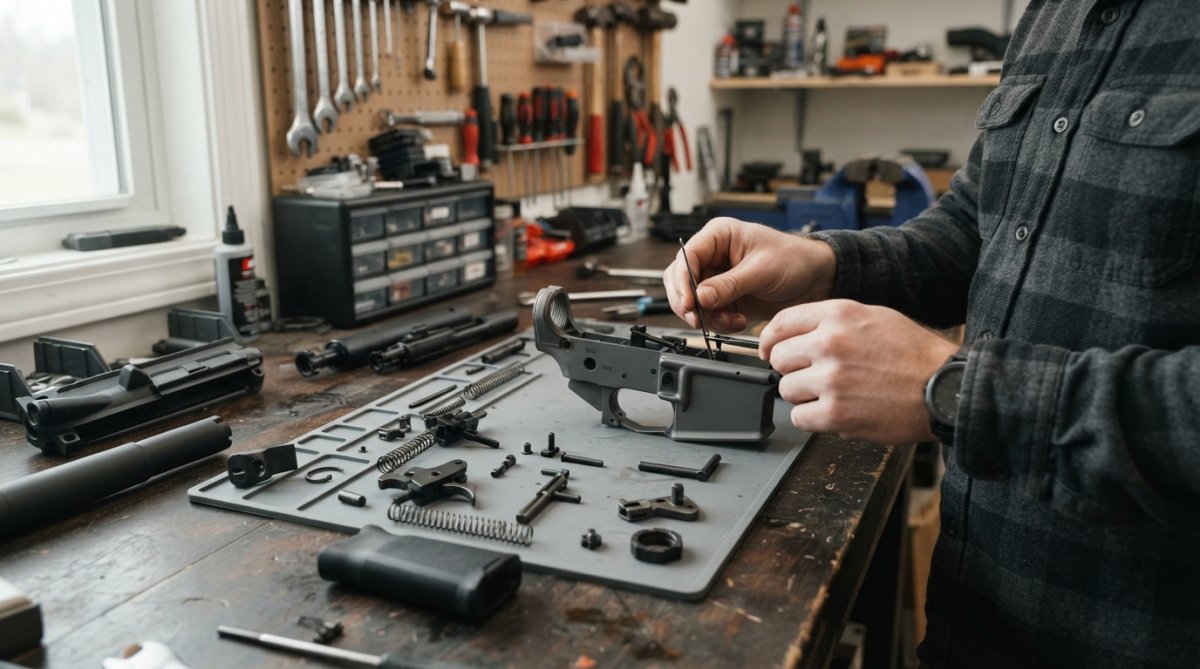
Adjustable and fixed triggers solve different problems. A fixed trigger locks you into one factory setting, which is fine if that setting happens to match your hand and your use case. An adjustable trigger lets you tune the pull weight, and often the travel, to fit you instead of the other way around.
The trade-off is real. Adjustable mechanisms add internal components, more screws, and more places for a careless adjustment to cause trouble. Fixed triggers are simpler and harder to get wrong.
| Factor | Adjustable Trigger | Fixed Trigger |
|---|---|---|
| Pull weight | Tunable within a range | Set at factory |
| Fit to shooter | High | Low |
| Complexity | More parts, more care | Simple |
| Best for | Precision, competition, custom builds | Carry pistols, set-and-forget setups |
| Adjustment risk | Real if done carelessly | Minimal |
Buy the trigger whose adjustment range brackets the weight you actually want. If you plan to run a hunting rifle at a heavier pull for cold-weather gloves, a trigger that only goes light is the wrong purchase no matter how good the break feels on the bench.
Lighter Trigger Pull Pros and Cons
Most guides treat lighter trigger pull as a simple good-or-bad question. The useful answer is conditional: a lighter pull is a benefit when the shooter, the firearm, and the task all support it, and a liability when any one of those three is out of alignment. The trade-offs below are the ones that actually show up at the range and in the field.
Where a lighter pull genuinely helps
- Precision and long-range shooting. Less force on the trigger means less disturbance of the sight picture at the moment of the break. At distance, a fraction of an inch of muzzle movement becomes inches on paper, so a clean, light break is easier to press straight through.
- Competition shooting. A lighter, crisp break shortens split times and makes it easier to call shots. In action-pistol and precision-rifle formats, the shooter is trained, the firearm is handled deliberately, and speed or precision is the scoring metric.
- Target shooting and bench work. A light, repeatable pull reduces fatigue over long strings and makes it easier to isolate trigger control from grip and breathing.
Where a lighter pull becomes a liability
- Self-defense and carry. Under stress and adrenaline, a very light pull on a carry pistol raises the risk of an unintended discharge. A defensive trigger should be heavy enough that a startle response or a sympathetic grip does not fire it early, and it should have a positive, tactile reset.
- Hunting in cold weather or with gloves. Cold hands and gloves reduce feel and fine control. A light trigger that feels crisp on the bench can feel unpredictable in the field, and a heavier, more deliberate pull is often the safer choice for a hunting rifle.
- New or infrequent shooters. A light trigger amplifies poor trigger discipline. If the shooter has not built the habit of keeping the finger off the trigger until the sights are on target, a light pull removes a margin of error.
- Firearms with rough or inconsistent sear engagement. A light trigger does not fix a gritty or variable pull; it makes the inconsistency more obvious. What you want is a repeatable break, not the lowest number on a gauge.
The mechanism behind the risk
Pull weight is only one part of trigger safety. Sear engagement, drop safety, and reset are separate mechanical functions, and reducing pull weight below the manufacturer’s stated minimum can compromise sear engagement. When that happens, the failure usually shows up as a slam-fire, a trigger that will not reset, or a firearm that fires when bumped, not as a gradual warning.
Dropping pull weight far below the factory minimum is the most common way people create a dangerous trigger. The sear can lose safe engagement, and the failure usually shows up as a slam-fire or a trigger that will not reset, not as a warning.
A balanced way to decide
Ask three questions before you lighten a trigger: Who will handle the firearm? What is the firearm actually used for? And does the manufacturer publish a safe adjustment range that brackets the weight you want? If the answers point to carry, cold-weather hunting, or an untrained handler, a heavier pull is usually the better trade. If they point to competition, precision, or bench work, a lighter, repeatable break is the benefit you are after.
Trigger Adjustment Safety: Staying Inside Manufacturer Limits
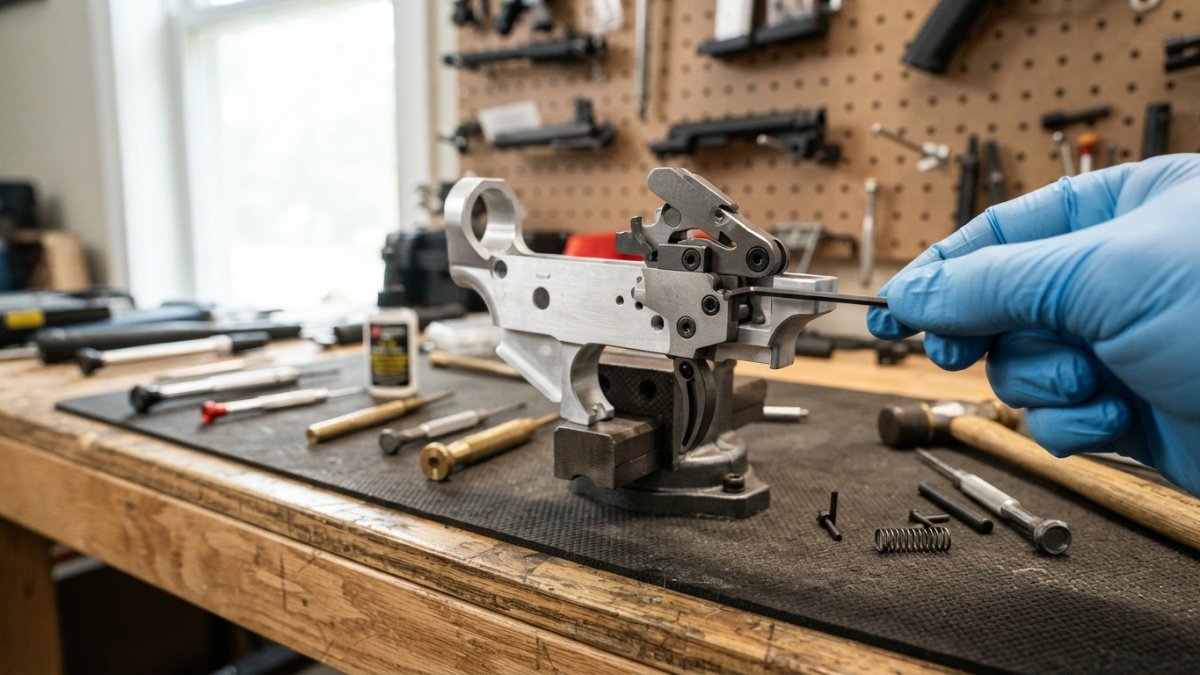
Trigger adjustment safety comes down to one rule: never go below the manufacturer’s stated minimum pull weight, and never back a screw out past the point the sear engagement is compromised.
Before you touch anything, read the trigger’s documentation and confirm the minimum pull weight and any thread-locker or torque spec.
- Confirm the manufacturer’s minimum pull weight
- Adjust one screw, one small increment at a time
- Function-test unloaded before every live session
- Check sear engagement and reset after each change
If a manufacturer-approved adjustment range does not exist for your trigger, treat the factory setting as fixed.
Matching Pull Weight to Your Use Case
Pull weight should match the job, and the job varies more than most shooters admit. A hunting rifle carried in cold weather wants a heavier, more deliberate pull than a range-only precision rifle.
For competition shooting and target shooting, a lighter, crisp break pays off because the shooter is trained, the firearm is handled deliberately, and speed matters. For a carry pistol or a hunting rifle, reliability and a margin of safety beat a light number every time.
A trigger with a broad, documented adjustment range suits shooters who run one platform for both range and field use, because they can set it heavy for carry season and lighter for practice.
That is where an adjustable trigger earns its keep: one firearm, several roles, and a pull weight you can shift to match. Our flat triggers and drop-in kits at Polymer Pew are built around that idea, with hardened stainless internals and anodized aluminum housings.
Measuring and Verifying Your New Pull Weight
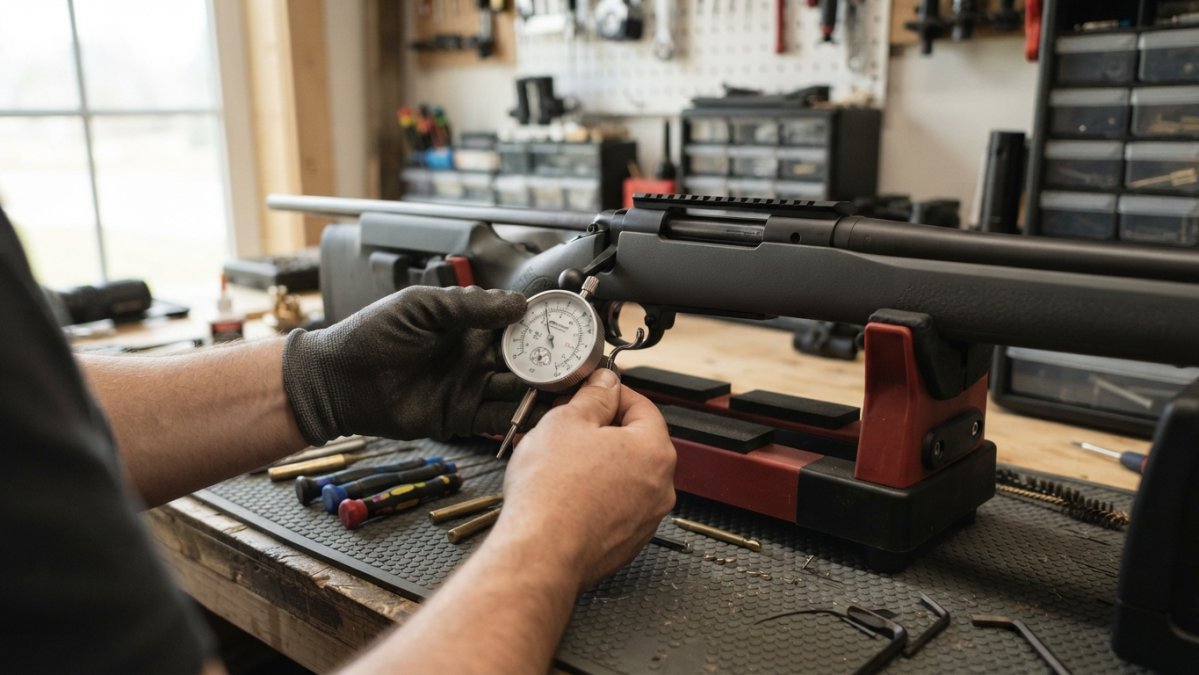
Verifying pull weight is a measurement problem, not a feel problem. A single reading tells you almost nothing about a trigger’s performance. What you want is repeatability: the same force and travel every shot, confirmed by multiple readings and a function check.
Measurement methods and what they tell you
- Trigger pull gauge (mechanical or digital). The standard tool. A digital gauge is easier to read and log; a mechanical gauge is simpler and does not need batteries. Either is far better than a fish scale, which is not calibrated for the range and does not hold a peak reading reliably.
- Peak versus average. Most gauges report the peak force at the break. Take at least five readings at the same point on the trigger face and record both the average and the spread. The spread is often more informative than the average.
- Measurement point. Measure at the same point on the trigger face every time, usually the center of the shoe where the finger naturally sits. Measuring at the tip or the edge changes the leverage and the reading.
- Pull direction and rate. Pull straight back, parallel to the bore, at a slow, steady rate. A fast yank reads higher; a hesitant pull can read lower. Consistency in how you pull matters as much as the gauge.
Why readings vary
A trigger that measures the same weight every time is worth more than one that measures lighter once. Variation across repeated pulls usually comes from one of four sources:
- Sear engagement and surface finish. Rough or inconsistent engagement produces a variable break.
- Spring settling. A new spring can settle slightly after the first few hundred cycles, which is why you re-check after a range session.
- Thread-locker and torque. An adjustment screw that is not secured can drift. Confirm any thread-locker or torque spec in the trigger’s documentation.
- Measurement technique. Different pull points, directions, or rates produce different numbers. Standardize your technique before you compare readings.
A verification protocol you can repeat
- Confirm the manufacturer’s minimum pull weight and any torque or thread-locker spec before you start.
- Make one small adjustment at a time. Turning several screws at once makes it impossible to tell which change caused a problem.
- Take five or more readings at the same point on the trigger face and average them. Record the average and the spread.
- Function-test the firearm unloaded: confirm the trigger resets, the safety engages, and the firearm does not fire when bumped or dropped from a safe height per the manufacturer’s instructions.
- Re-check the weight after a range session and compare against the factory specification and your log.
- If the numbers drift or the break feels different after a few hundred rounds, stop and have a gunsmith inspect the sear engagement.
A trigger that measures the same weight every time is worth more than one that measures lighter once. Repeatability is the real deliverable of an adjustable trigger.
Logging and when to stop
Record the weight, the date, the round count, and the adjustment made. The National Shooting Sports Foundation safety resources are a reasonable starting point for general firearm safety guidance, and any reputable gunsmith can verify engagement angle and internal components.
For the measurement side, a quality gauge and a written log beat guesswork. The goal is not a single impressive number; it is a documented, repeatable pull weight that holds where you set it.
Frequently Asked Questions
What are the benefits of an adjustable trigger pull weight?
An adjustable trigger lets you set pull weight to match your specific use: a lighter, consistent break for precision target shooting, a slightly heavier pull for a carry pistol or hunting rifle where gloves and adrenaline are factors. You get a consistent pull, a cleaner trigger break, and the ability to tune the trigger to your hand and shooting style instead of adapting to a factory setting. It also lets you compensate as springs wear or as you change platforms.
How does trigger pull weight affect accuracy and control?
A lighter, consistent pull reduces the force you apply to the trigger, which limits how much the muzzle moves before the shot breaks. That matters most in precision and long-range shooting, where small input errors show up on target. A heavier pull can make the trigger break feel less predictable and can pull the sights off target, especially for newer shooters. The bigger factor is consistency: a repeatable pull weight and clean trigger break help more than raw lightness.
Is a lighter trigger pull always better?
No. A very light pull can be a liability on a self-defense pistol or a hunting rifle used in cold weather or with gloves, where a bump or snag could fire the gun unintentionally. Very light settings can also interact poorly with worn sear engagement or a light striker spring, causing unreliable ignition. Lighter is better for controlled, precision shooting; heavier and more deliberate is often better for carry and field use.
Can trigger pull weight be adjusted on every firearm?
No. Many factory triggers are fixed and have no user adjustment, and some designs only allow limited spring or sear engagement changes. Aftermarket adjustable triggers, drop-in kits, and replacement trigger springs are the usual path to a tunable pull. Before adjusting, check the manufacturer’s specification and adjustment range. Going outside the approved range can cause unreliable reset, light primer strikes, or an unsafe trigger, and it may void the warranty.