Quick Summary
The best budget AR-15 trigger depends on your build goals. A mil-spec replacement or budget single-stage suits general-purpose builds, while a budget two-stage trigger in the under-$100 group suits precision-focused shooting. Confirm current pricing and lower-receiver compatibility before buying.
- Single-stage triggers break in one continuous pull, suiting rapid strings and general-purpose shooting.
- Two-stage triggers add a takeup stop, letting you prepare the shot before committing.
- A trigger that stays consistent matters more than the lowest price, even at $40.
- Verify a drop-in trigger’s platform, pin size, included parts and selector compatibility before buying.
- The sources did not publish repeatable accuracy data, so precision claims remain unverified.
Table of Contents
- How We Picked These Five Budget AR-15 Triggers
- Top 5 Budget Friendly Trigger Upgrades for Custom Builds
- Single-Stage vs. Two-Stage AR-15 Trigger: Which Fits Your Build
- Best AR-15 Trigger for the Money: Price Versus Performance
- Best AR-15 Drop-In Trigger Upgrade and Installation Checks
- Best AR-15 Trigger for Precision Shooting
- Pick the Trigger That Matches Your Build and Shooting Goals
- Frequently Asked Questions
How We Picked These Five Budget AR-15 Triggers
Our list covers budget AR-15 triggers, meaning options that sit at the low end of the market while still being usable upgrades. Price was the entry ticket. Beyond that, we looked at how each trigger is described in the sources we could verify, whether it is a single-stage or two-stage design, and how clearly its specifications were stated. We did not run our own bench tests, so we say so where a claim comes only from a published comparison.
Last Updated: November 22, 2026
Most budget trigger guides rank products on price alone. We think that misses the point. A trigger that costs less but feels gritty or inconsistent is a poor buy, even at $40. The sources that compared these triggers mostly described them as affordable, easy to install, or good value, rather than giving repeatable pull-weight numbers. That is useful, but it is not the same as measured performance, and we flag where the evidence is thin.
We also left out products we could not place with a clear price or design. A trigger with no verifiable cost does not help a builder decide, so it did not make the cut.
Top 5 Budget Friendly Trigger Upgrades for Custom Builds
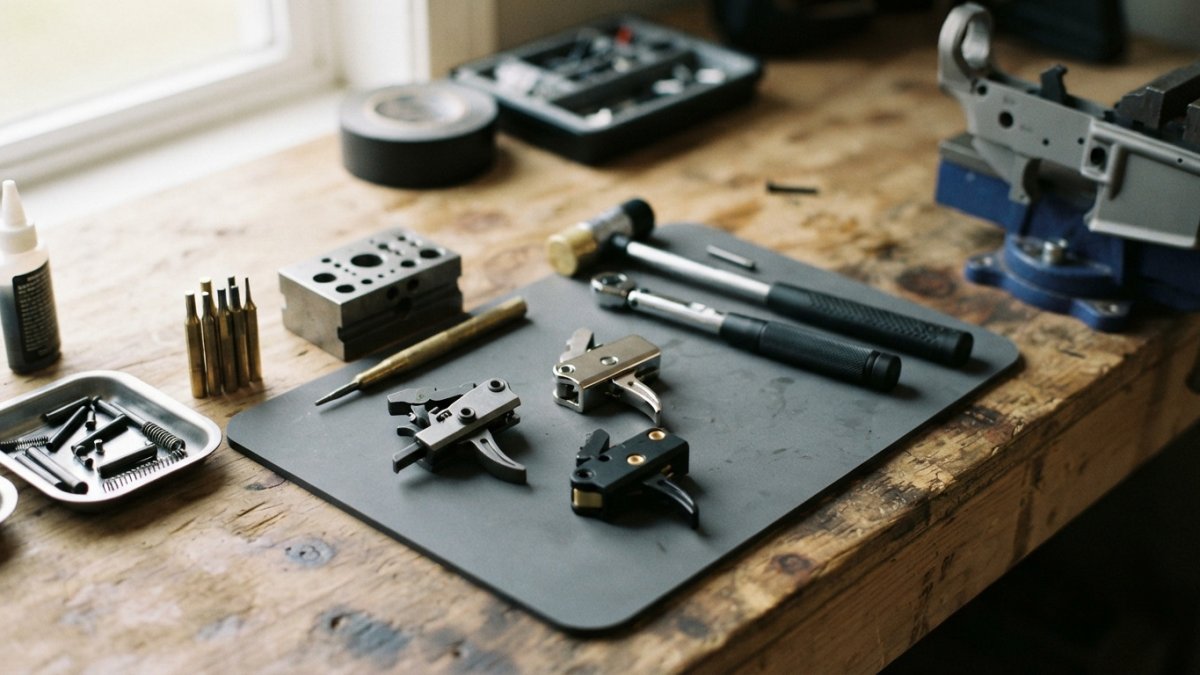
Here are five budget-friendly AR-15 triggers worth a look for a custom build. Pricing depends on the seller and may have changed since the comparisons were written, so confirm current pricing before you buy.
1. CMMG Mil-Spec Trigger
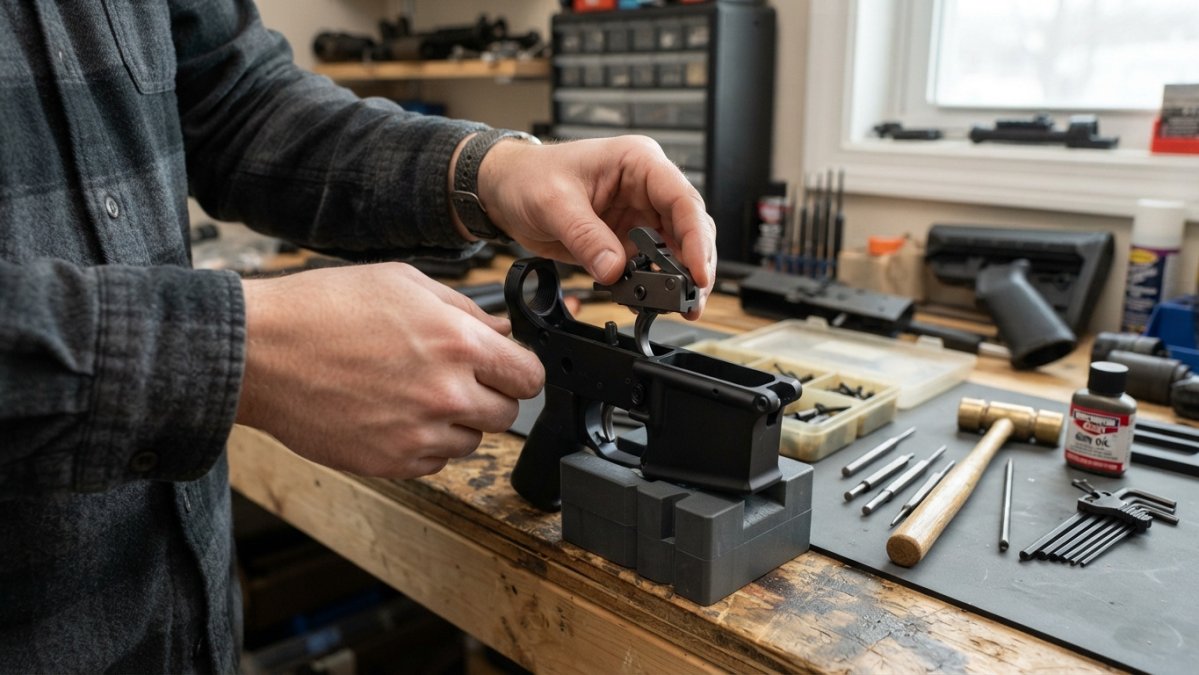
It is a mil-spec replacement, which makes it a sensible choice for a basic swap. Pros: mil-spec design. Cons: no detailed performance or installation specs were published in the sources we found.
2. ALG Defense QMS
Several guides name the QMS as a budget pick. Pros: consistent recommendation across sources. Cons: the sources do not describe its break or reset in detail.
3. Rise Armament Rave 140
Pricing for this trigger varies by seller. It is described as an affordable, easy-to-install single-stage trigger. Pros: simple to install, single-stage feel. Cons: warranty and detailed specs were not in the supplied results.
4. LaRue MBT-2S
The MBT-2S shows up in several comparisons as a value-oriented two-stage option. Pros: recommended as a value pick. Cons: pricing varies by seller.
5. Rise Armament RA-100, Schmid 2-Stage NiB, or Rock River Arms National Match
A 2026 guide compares these two-stage options under a $100 ceiling. We could not verify individual prices for each one, so treat them as a shortlist to check. Pros: two-stage designs at a low price point. Cons: exact prices and full specifications were not published in the sources.
Check Poly Pew’s website for current catalog options and pricing.
Prices of budget AR-15 triggers
Single-Stage vs. Two-Stage AR-15 Trigger: Which Fits Your Build
A single-stage trigger breaks in one continuous pull with no pause. A two-stage trigger has a distinct takeup stage, a deliberate slack point, before the break. That difference drives most of the feel decision, and it is the first thing to settle before you compare prices.
How each design actually feels
- Single-stage: You feel resistance almost immediately, then the break. There is no slack to take up, so the shot releases within one motion. The feel is typically described as direct and predictable, which suits rapid strings and general-purpose shooting.
- Two-stage: The first stage is light takeup that stops at a wall; the second stage is the break. That wall lets you prepare the shot before committing, which many shooters prefer for slow, deliberate fire. The trade-off is that a two-stage design takes a little getting used to if you have only run mil-spec triggers.
Pull weight and feel characteristics to compare
Published specs for budget triggers usually list a pull-weight range rather than a single number. A common pattern is a single-stage pull in the mid-single digits and a two-stage pull with a light first stage and a heavier second stage, but the sources we reviewed did not publish repeatable measurements for every model, so treat any number as a starting point. What matters more than the box number is consistency: a trigger that varies between shots will hurt precision regardless of price. Break, reset, and take-up are the three characteristics to evaluate together, a clean break with a short reset and minimal creep is the combination most shooters associate with a good trigger, and it is achievable at a budget price.
Match the design to the build and the shooter
- General-purpose build: A single-stage or mil-spec replacement is usually enough. It is simpler, common in utility builds, and the lower cost leaves budget for other parts.
- Precision or competition-focused build: A two-stage trigger is the usual pick, because the takeup stage lets you prepare the shot before committing. Even a budget two-stage can deliver that control.
- First-time builder: Start with the design you have actually shot. If you have only used a mil-spec trigger, a budget single-stage is the smallest change; if you want to learn a two-stage, the under-$100 group is a sensible entry point.
For a single-stage vs. two-stage AR-15 trigger comparison with more detail on each design, the full explainer covers how each one behaves in practice.
Watch out: a two-stage trigger with a very light first stage can feel like creep to a shooter used to single-stage triggers, so dry-fire both designs before you commit if you can.
The core difference between the two designs shows up in how each one breaks and what it asks of the shooter.
| Design | How it breaks | Best for |
|---|---|---|
| Single-stage | One continuous pull, no pause | General-purpose and rapid strings |
| Two-stage | Takeup stop, then a deliberate break | Slow, deliberate or precision fire |
| Single-stage (budget) | Feel described as direct and predictable | Utility builds |
| Two-stage (budget) | Light first stage, heavier second | Precision-focused builds |
Best AR-15 Trigger for the Money: Price Versus Performance
The cheapest trigger is not always the best value. A $40 trigger that stays consistent will serve you better than a $30 one that feels inconsistent. Price-to-performance depends on what you need the build to do.
For a budget-conscious builder who wants a real two-stage trigger, the under-$100 group is a sensible place to look. For basic utility builds, a mil-spec replacement at the lower end can be enough.
If you are weighing a budget option against a more expensive one, our NDZ Performance vs custom triggers comparison puts the two side by side on price and performance.
Best AR-15 Drop-In Trigger Upgrade and Installation Checks
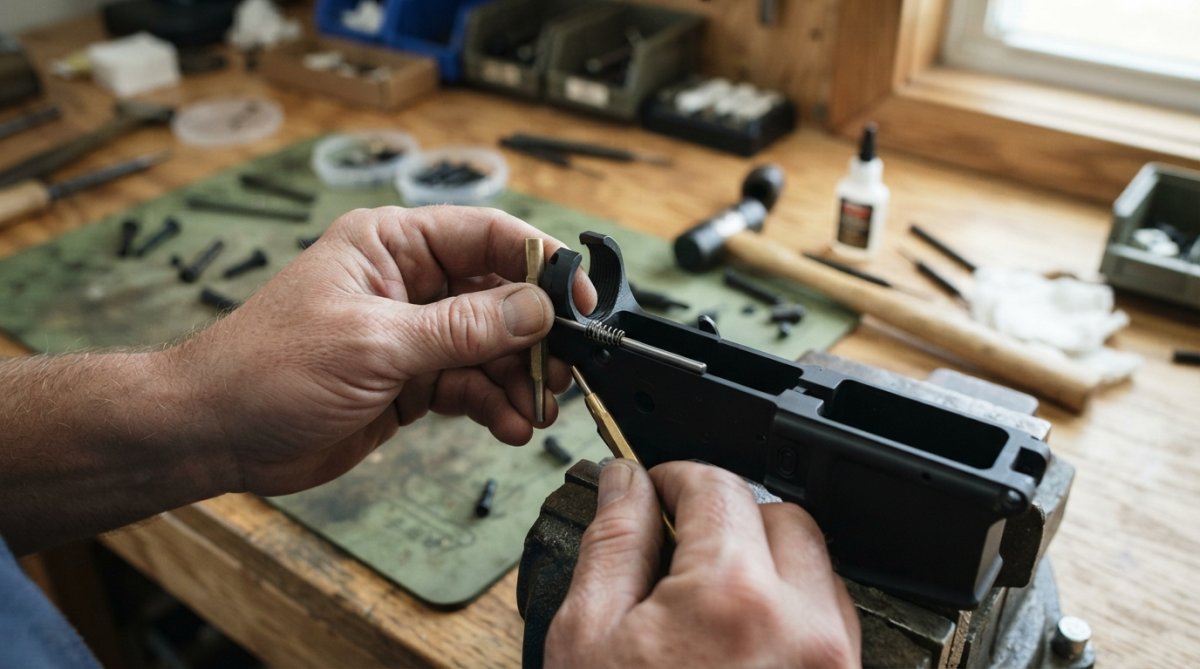
A drop-in trigger group is a pre-assembled unit that fits into the lower receiver without fitting work. It is often the easier path for a first upgrade, but “drop-in” is not a guarantee of fit. Use this checklist before you buy and again before you fire.
Compatibility checks before purchase
- Platform and lower: Confirm the trigger is listed for your lower’s pattern and pin size. Most budget drop-ins are sold for the common pattern, but pin diameter and hammer width vary, so check the product listing against your lower’s specs.
- Included parts: A complete drop-in should include the trigger group, hammer, disconnector, and the pins or screws that retain it. If the listing does not say what is included, assume it is not and budget for the missing parts.
- Safety and selector: Verify the unit is described as compatible with a standard safety selector and that it does not require a proprietary selector unless the listing says so.
- Tools: Most drop-ins need only basic hand tools, a punch set, a small hammer, and a bench block. Component-style triggers need more, including spring and pin installation, so pick the style that matches your comfort level.
Installation and function checks
- Install with the rifle unloaded and the magazine removed, following the manufacturer’s instructions.
- Confirm the hammer, disconnector, and safety parts are seated correctly and the retaining pins or screws are fully engaged.
- Cycle the action and confirm the trigger resets and the safety engages and disengages.
- Perform a function check per the manufacturer’s instructions before live fire.
Watch out: a trigger that binds during the first cycles usually means a fit or alignment problem. Stop, check the seating, and do not force the parts.
Durability and maintenance
The sources we reviewed emphasize initial feel and value rather than round count, wear, or cleaning, so we cannot tell you which budget trigger lasts longest. A common pattern is that drop-in units need little maintenance beyond keeping the fire-control area clean and lightly lubricated per the manufacturer’s guidance. Track your round count and recheck function after the first range session.
If you are ready to install, the high performance trigger kit installation guide walks through tools, safety checks and common mistakes. For a first-timer, our custom trigger installation guide covers the basics step by step.
Best AR-15 Trigger for Precision Shooting
For precision work, look for a clean break, a short reset and minimal creep. Two-stage triggers are the usual pick here, because the takeup stage lets you prepare the shot before committing.
The sources we reviewed did not publish repeatable accuracy data for these triggers, so we cannot tell you which one improves group size. Pull weight consistency matters more than the number on the box. If a trigger varies between shots, it will hurt precision regardless of price.
Pick the Trigger That Matches Your Build and Shooting Goals
Start with the job. A general-purpose build can do well with a budget single-stage or mil-spec trigger. A precision-focused build is better served by a two-stage option, even at a slightly higher cost.
A two-stage trigger in the under-$100 group can cover both general use and more deliberate shooting. Check current prices before you buy, and confirm compatibility with your lower receiver.
Ready to upgrade? Browse Poly Pew’s trigger range and find the right fit for your build. Get your Flatties here!!!
Frequently Asked Questions
What is the best AR-15 trigger for the money?
For most budget builds, the strongest value is a well-reviewed mil-spec or entry two-stage trigger in the under-$100 range. The Rise Armament RA-100, Schmid 2-Stage NiB, and Rock River Arms National Match are all named in 2026 budget two-stage comparisons with an under-$100 ceiling, though the sources don’t give exact prices for each. The ALG Defense QMS is another named budget option. Confirm current prices at the retailer before you buy, since street prices change.
Is a two-stage trigger better than a single-stage trigger?
Neither is better across the board. A two-stage trigger has a defined takeup stage before the break, which many shooters find more controlled for precision work. A single-stage trigger is simpler, usually cheaper, and works well for general-purpose and fast-handling builds. Pick based on how you shoot and whether you value a staged feel over simplicity.
Are drop-in AR-15 triggers worth the extra cost?
Drop-in triggers are designed to install as a complete unit, which saves fitting time and reduces the chance of a mismatched part. That convenience matters most for first-time builders. Check that the trigger group matches your lower receiver and hammer pin setup before buying, since compatibility is the usual source of installation trouble.
Which AR-15 trigger is best for precision shooting?
Precision shooters usually want a two-stage trigger with a clean break and consistent pull weight. The LaRue MBT-2S is described in the research as a value-oriented two-stage option, and the Geissele SSA-E X Lightning Bow is another frequently named option. Budget two-stage triggers can work well for precision use too, but test pull weight yourself before relying on any trigger for competition.